
Desert Treasure
How China is turning deserts into strategic assets.

For centuries, deserts were regarded as economic dead zones. Too dry for agriculture, too remote for large populations, and too hostile for industry. The Gobi and Taklamakan deserts were no exceptions. Stretching across western China and southern Mongolia, they served primarily as natural barriers between imperial China and nomadic empires. Trade caravans crossed them along the Silk Road, but only out of necessity. Like most arid regions throughout history, they were valued as spaces to pass through, not to develop.
However, the global energy transition is turning that historical logic completely upside down.
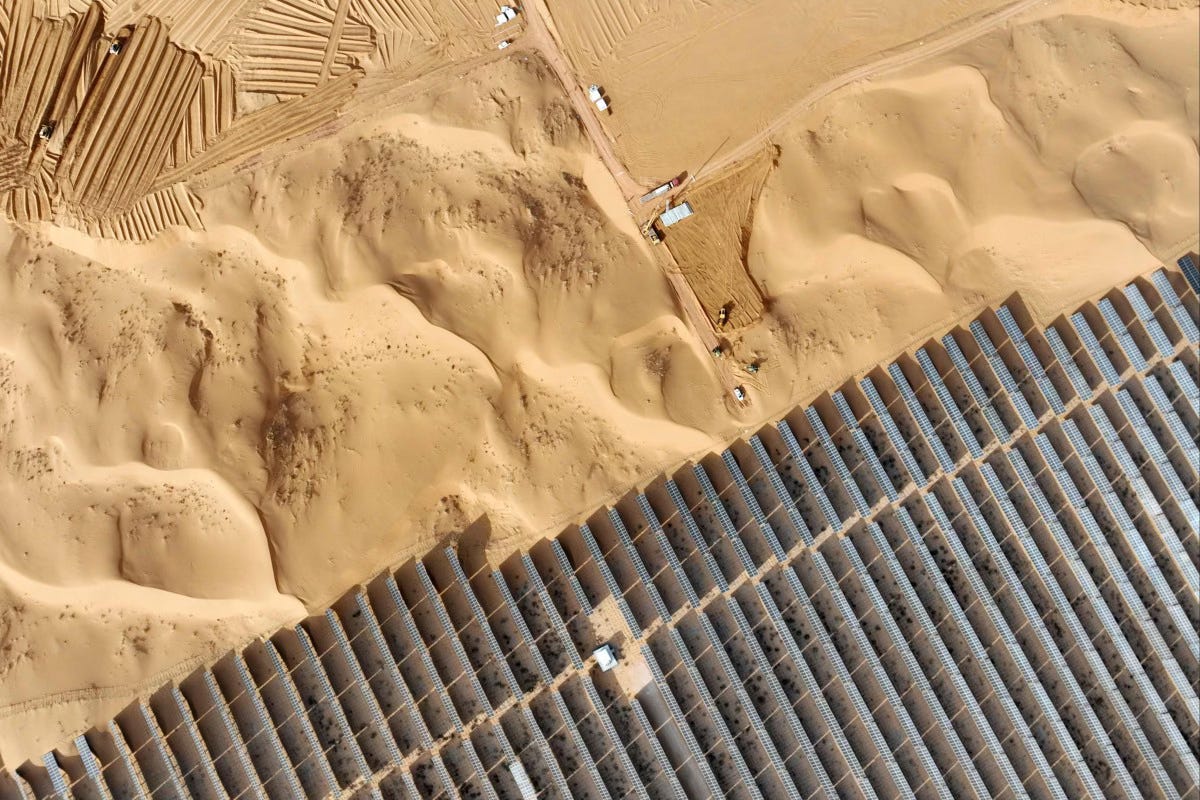
China is often described as an extremely densely populated country—and that is certainly true if you think of Beijing, Shanghai, or Shenzhen. Yet, that perception is misleading.
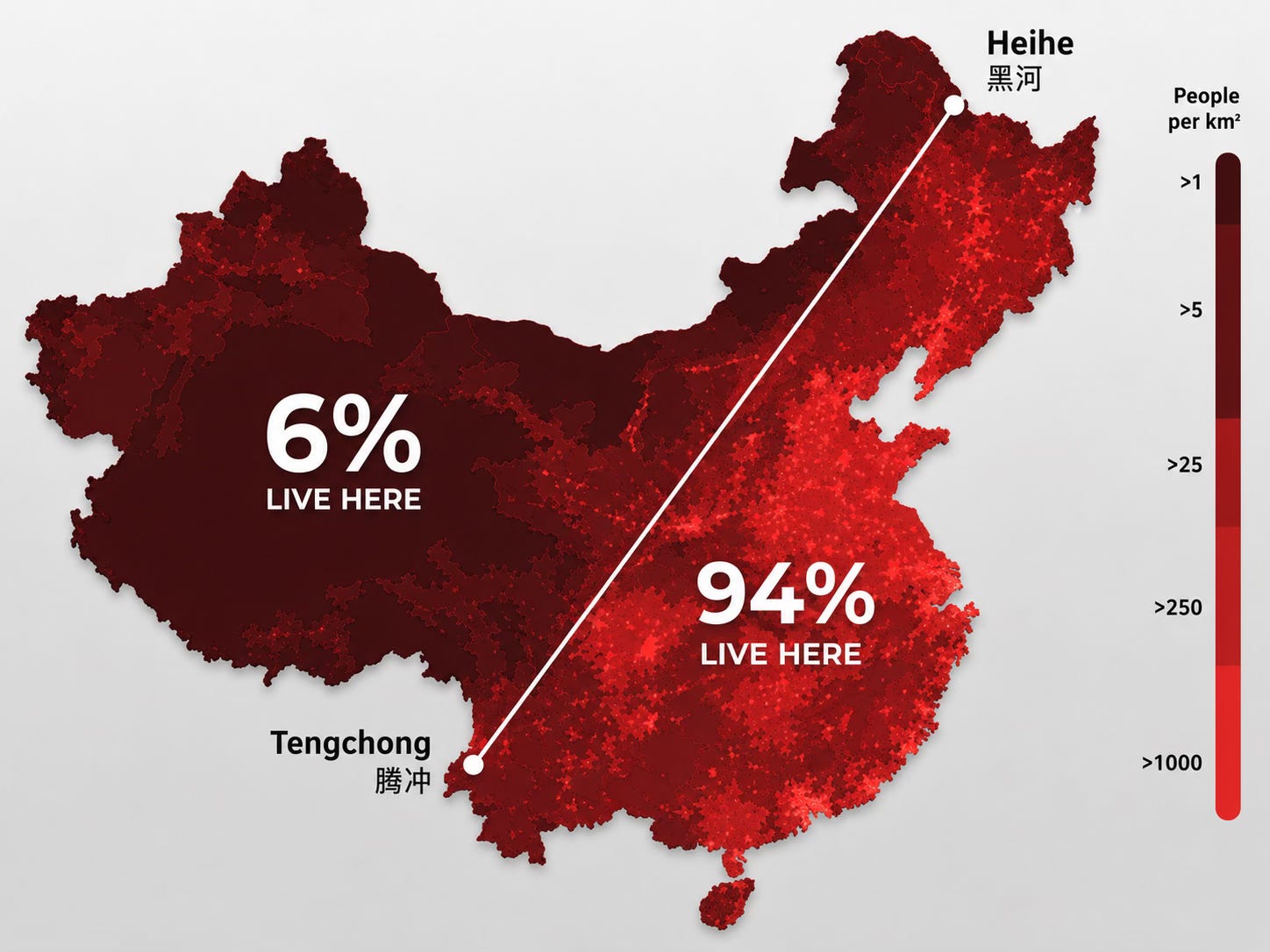
To understand why, we must look at China's demographic divide, famously captured with the Heihe-Tengchong Line—the conceptual boundary introduced by Chinese geographer Hu Huanyong in 1935. It divides China into two portions with contrasting population densities and climates.
Over 94% of China’s population is crammed into the eastern side of the country, packed into coastal manufacturing hubs, financial centers, and megacities. The remaining 6% lives west of the line, an area encompassing 57% of the nation’s landmass. Nearly a fifth of this western region is covered by the Gobi and Taklamakan deserts. While this spatial imbalance was long viewed as a strategic weakness, it now gives China two profound structural advantages in the clean energy race.
First, leaving the western provinces sparsely populated means millions of square kilometers remain free from urban sprawl, soaring real estate costs, or competing land-use demands. This creates vast and uninterrupted terrain ideal for mega-scale energy harvesting, a footprint physically impossible to construct near the crowded eastern seaboard.
Second, geography provides a critical temporal advantage.
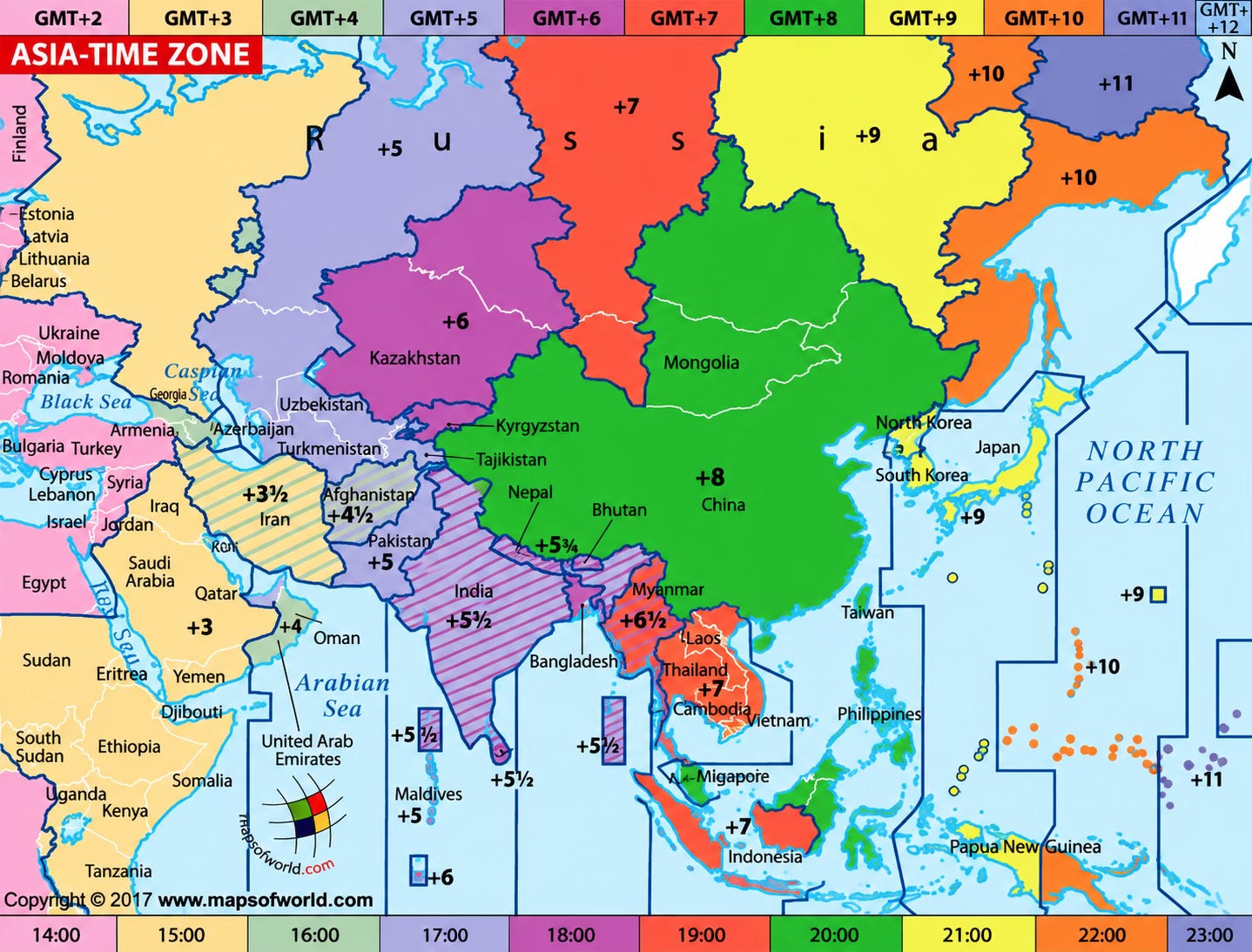
Although China officially operates under a single time zone, its landmass geographically spans four. Western regions such as Xinjiang and the Gobi Desert not only receive more than 3,000 hours of sunshine each year, but continue generating solar power long after the sun has begun to set across the eastern coast. As millions of workers in eastern cities leave their offices and electricity demand surges, western solar farms are still producing substantial amounts of electricity. This natural geographic delay feeds clean power into the national grid during the early stages of the evening demand peak, effectively extending the operational window of China's renewable energy system by several hours.
That geographical advantage, however, only postpones a fundamental reality. Eventually, the sun also sets over Xinjiang, the Gobi, and the Taklamakan.
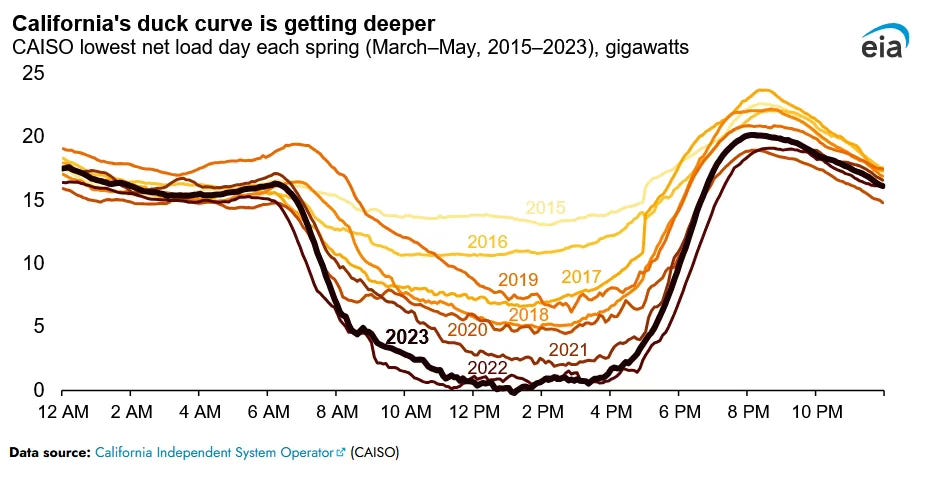
Generating electricity has never been the most difficult part. Generating electricity when people actually need it has. As countries continue installing solar capacity at record speed, electricity production increasingly peaks around midday. Precisely when demand is relatively modest. By contrast, consumption surges in the evening as people return home, cook dinner, switch on the lights, charge electric vehicles, and power air conditioning. By then, solar generation has collapsed to zero.
Grid operators refer to this imbalance as the duck curve, named for the distinct shape it creates on generation charts. As more solar panels are installed, daytime electricity becomes increasingly abundant while evening shortages become increasingly severe. Around noon, wholesale electricity prices can collapse because supply exceeds demand. Just a few hours later, dispatchable power stations must rapidly compensate for the loss of solar generation.
The challenge, therefore, is no longer building more solar panels. It is moving electricity through time.
Earlier this month, China took a step toward solving that problem. Near the city of Hami on the edge of the Gobi desert, the commercial trial of the world's largest concentrated solar power (CSP) plant officially began. Rather than relying solely on photovoltaic panels, the facility uses more than 260,000 tracking mirrors to concentrate sunlight onto a central receiver, heating molten salt to roughly 550°C (1,022°F). The stored heat can later be used to produce steam, allowing conventional turbines to continue generating electricity for up to eight hours after sunset.
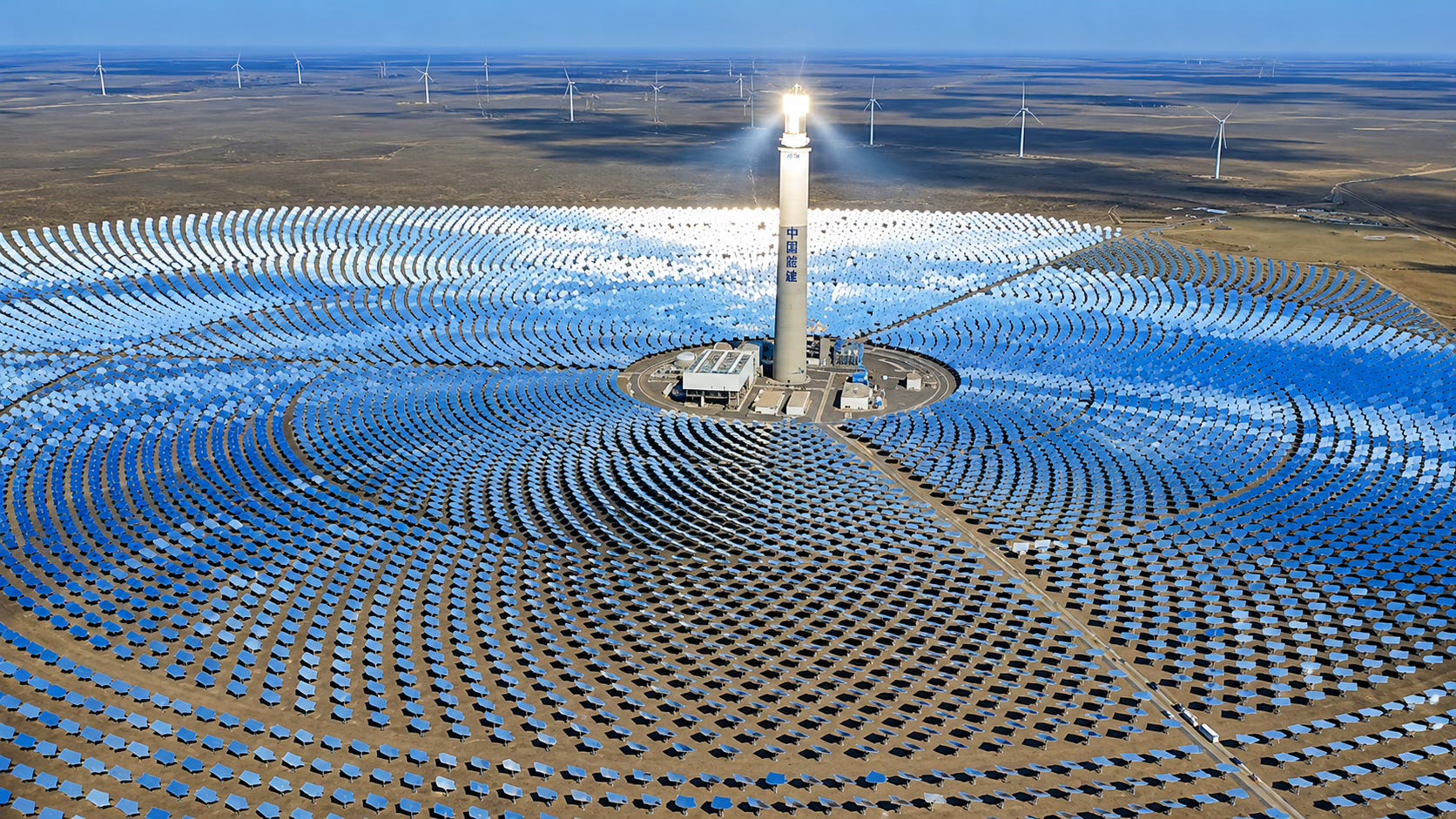
While the technology itself is not new, China’s breakthrough lies in its capacity to make it economically feasible at such an extraordinary scale in the harsh conditions of the desert. This momentum was on full display in June, when construction began on another massive thermal storage capacity mirror array in Qinghai. Unsurprisingly, it promises to be yet another 'world's largest' for China.
Skeptics might argue that the demographic imbalance between western and eastern China remains a major disadvantage. After all, most of the electricity generated in the country's western deserts must travel more than 3,000 kilometres to reach the energy-hungry industrial centres along the eastern coast.
To bridge this gap, China anticipated the challenge long before its vast solar and wind projects came online. Over the past two decades, it invested heavily in ultra-high-voltage (UHV) direct-current transmission lines, creating the world's largest long-distance electricity network. Operating at exceptionally high voltages, these lines can transmit vast amounts of electricity over thousands of kilometres with remarkably little energy loss.
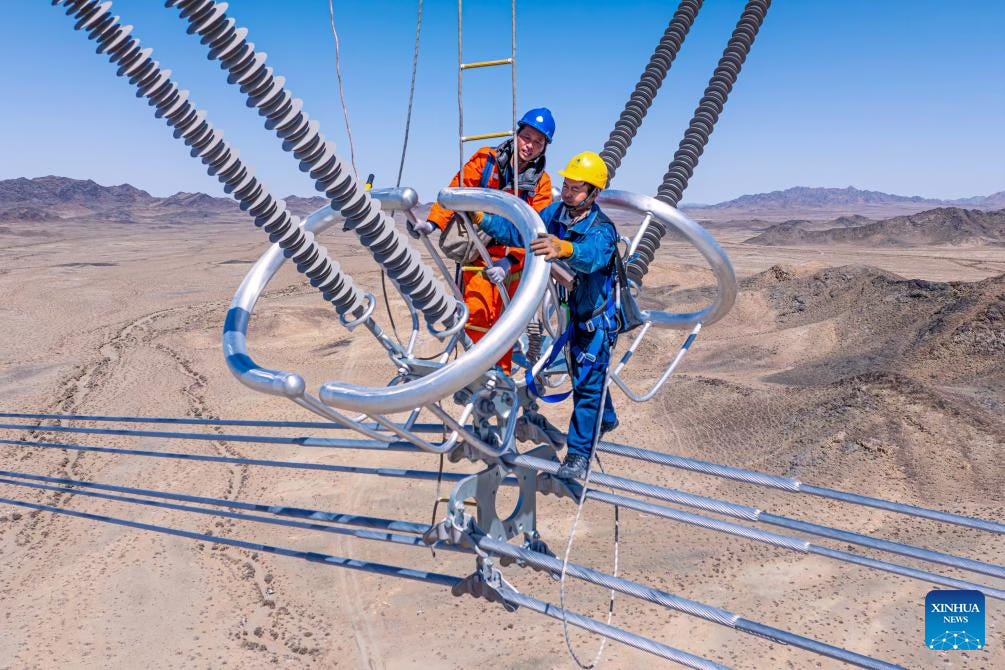
Today, renewable electricity generated in Xinjiang and the Gobi Desert can be transmitted efficiently to factories and cities thousands of kilometres away. Despite these vast distances, electricity reaches eastern load centres in just a few milliseconds thanks to China's advanced UHV transmission technology. Rather than treating generation, storage and transmission as separate investments, Beijing has developed them as parts of a single, integrated energy system.
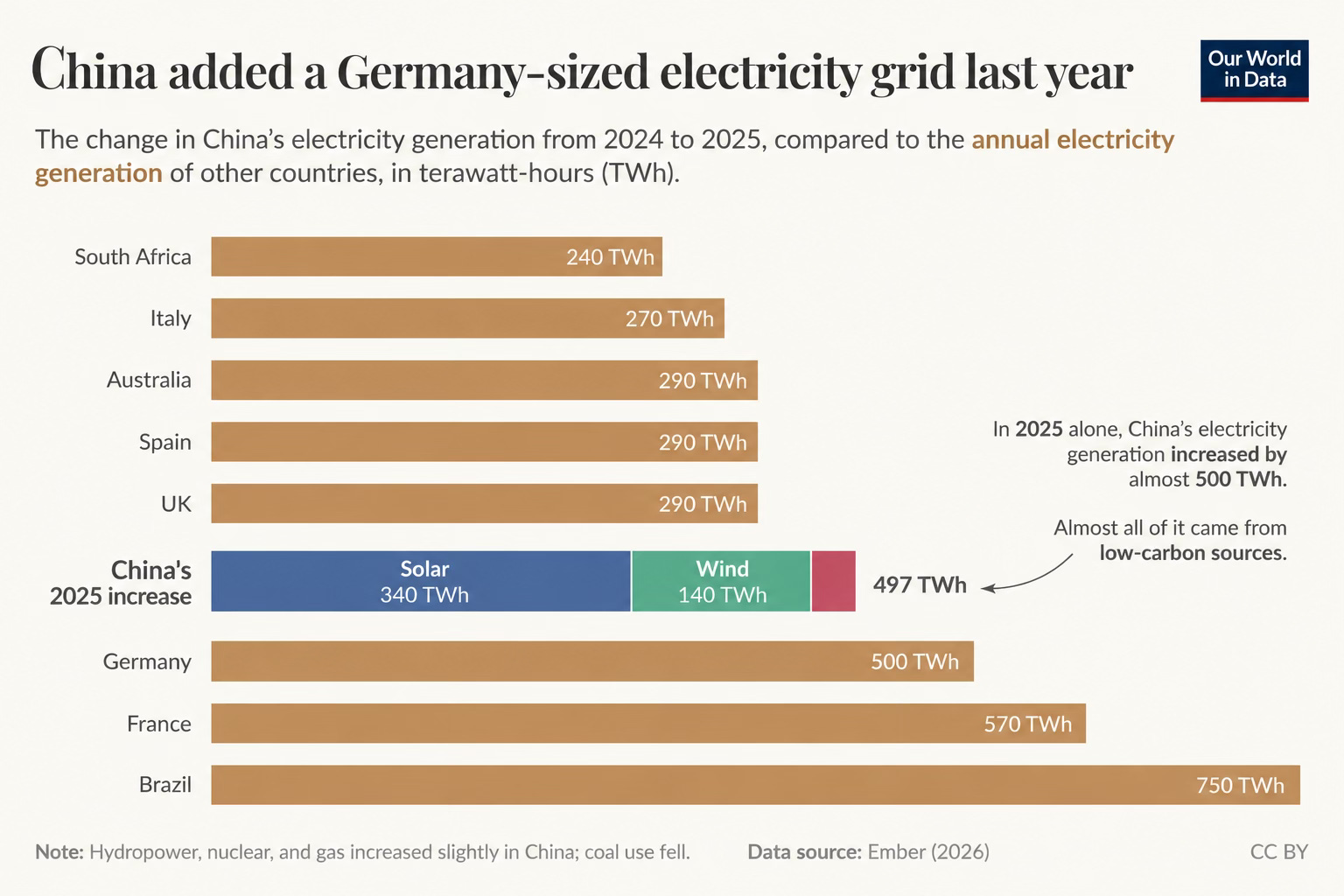
This seamless grid does more than just move power—it is rewriting the economics of energy. While many economies struggle to supply enough power as demand surges, China’s industrial apparatus is generating electricity at an unprecedented scale. Total installed solar capacity reached 1.27 billion kilowatts (1.27 TW) by June, and is poised to overtake coal as China’s largest source of installed power capacity this very year.
Yet, this milestone marks a pivotal shift: having flooded the market with raw capacity, Beijing is now deliberately cooling down blind expansion to focus on grid absorption, transmission efficiency, and market-driven pricing. As the sector pivots from sheer scale to high-quality development, this vast supply of clean power continues to provide a massive cost advantage to both industrial manufacturing and everyday households.
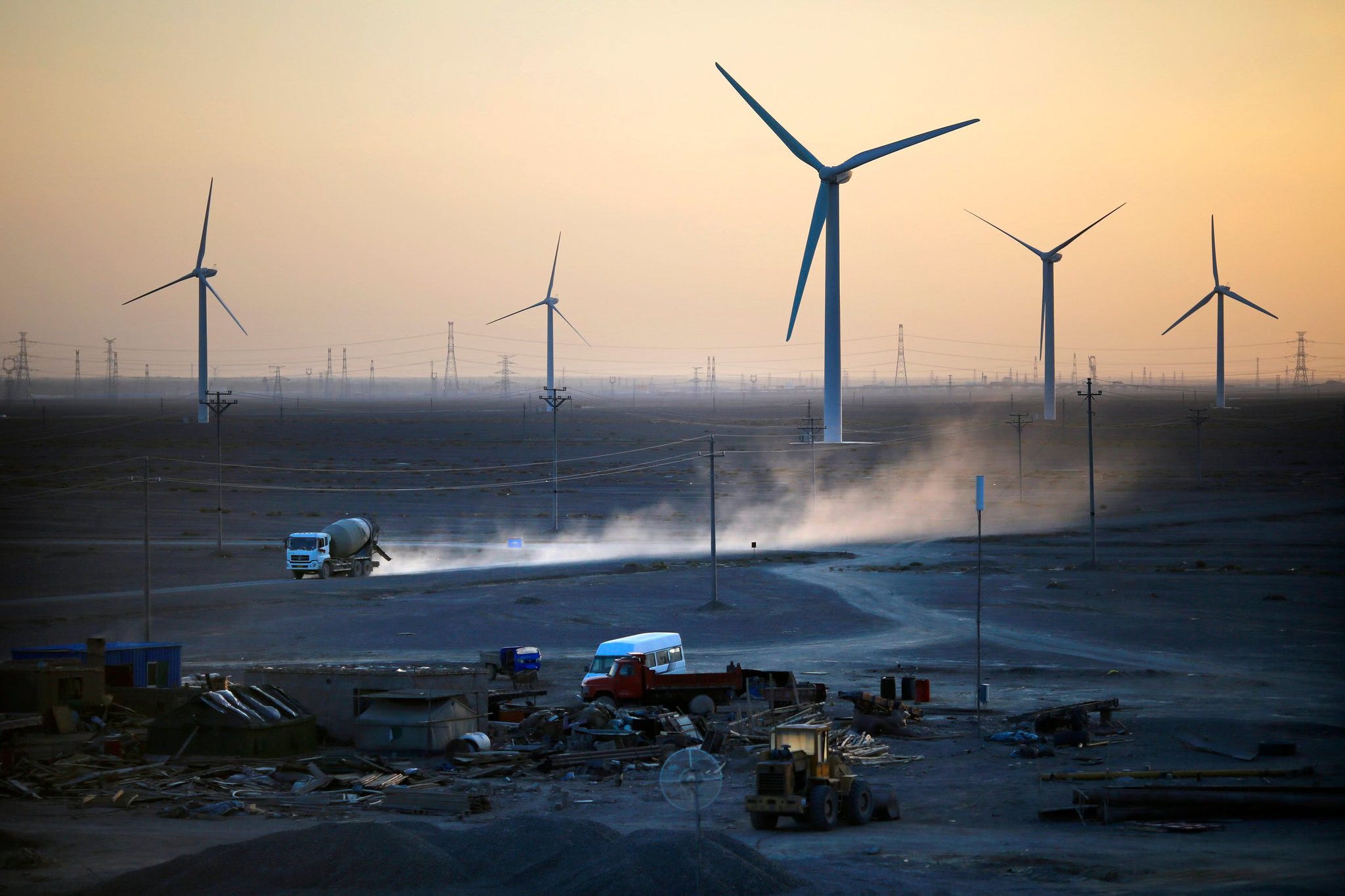
Critics of renewables often point to curtailment, transmission bottlenecks, and intermittency as proof that mega-scale green energy remains fundamentally flawed. Those grid-level hurdles are real, and as a matter of fact, the deserts present harsh environmental obstacles of their own. Shifting dunes constantly threaten solar sites, while strong winds—though great for energy production—whip up abrasive sand that wears down wind turbine blades and gearboxes, cutting operational efficiency by anywhere from 2% to 20%.
In response, China’s approach has not been to slow deployment, but to build the physical infrastructure required to overcome these harsh environmental conditions. A prime example is the Great Green Wall. Launched in 1978 and scheduled for completion around 2050, this decades-long project aims to combat desertification by planting billions of trees across northern China.
Beyond halting desert expansion, these vast forest belts serve a vital dual purpose: they act as natural windbreaks and sand barriers, anchoring shifting dunes and reducing airborne dust to protect delicate solar panels and wind turbines. To ensure these defenses last, Chinese scientists continue to innovate, recently turning to sustainable bamboo barriers to replace short-lived straw grids. With an estimated 66 billion trees planted, China is actively leveraging nature itself to shield its energy infrastructure.
This is precisely what makes Beijing’s approach so compelling. Rather than merely deploying solar panels across empty sands, China is weaving cheap manufacturing, massive desert energy hubs, long-duration storage, UHV lines, and smart grid coordination into one seamless machine.
Ultimately, resolving the duck curve isn't just about clean tech. It’s a massive systems-engineering puzzle, and China's true edge stems from its unique capacity to plan, coordinate, and execute at such a monumental scale.
China’s ambitions should therefore not be underestimated. Driven by unique geography, decades of targeted infrastructure, and unmatched industrial execution, deserts once dismissed as barren voids are becoming the powerhouses of the 21st century. The question is no longer whether arid wastelands can power modern economies—it is whether any other nation can pull off the integrated system China has built around them.
Thank you for reading!
If you enjoy connecting the dots behind the headlines, subscribe for free. New pieces land straight in your inbox.
📨 If you think someone would enjoy this, send it their way!
Excellent piece, Atlas. What strikes me most is that China is not simply exploiting geography—it is changing its functional meaning. Remoteness, time-zone lag, intense solar exposure and vast empty land become strategic advantages only because storage, UHV transmission, ecological stabilization and industrial manufacturing are engineered as one system. That suggests a broader point: geography is not necessarily destiny when infrastructure can alter what distance and terrain actually mean. The real strategic asset, then, is not the desert itself, but the conversion architecture that turns otherwise marginal space into dispatchable industrial power.
Another brilliant and compelling article. Every continent has the potential for this type of initiative. There is hope for the planet if it happens in time.