Division of Labor
An emerging axis is quietly undermining Western containment

For years, Western commentators have searched for a tidy acronym to describe the realignment of global autocracy. The term increasingly favoured is CRINK—China, Russia, Iran, and North Korea. Yet describing CRINK as a traditional alliance misses the point. Alliances depend on shared ideology and long-term obligations. CRINK is held together by something more immediate: operational necessity and a shared hostility toward Western dominance.
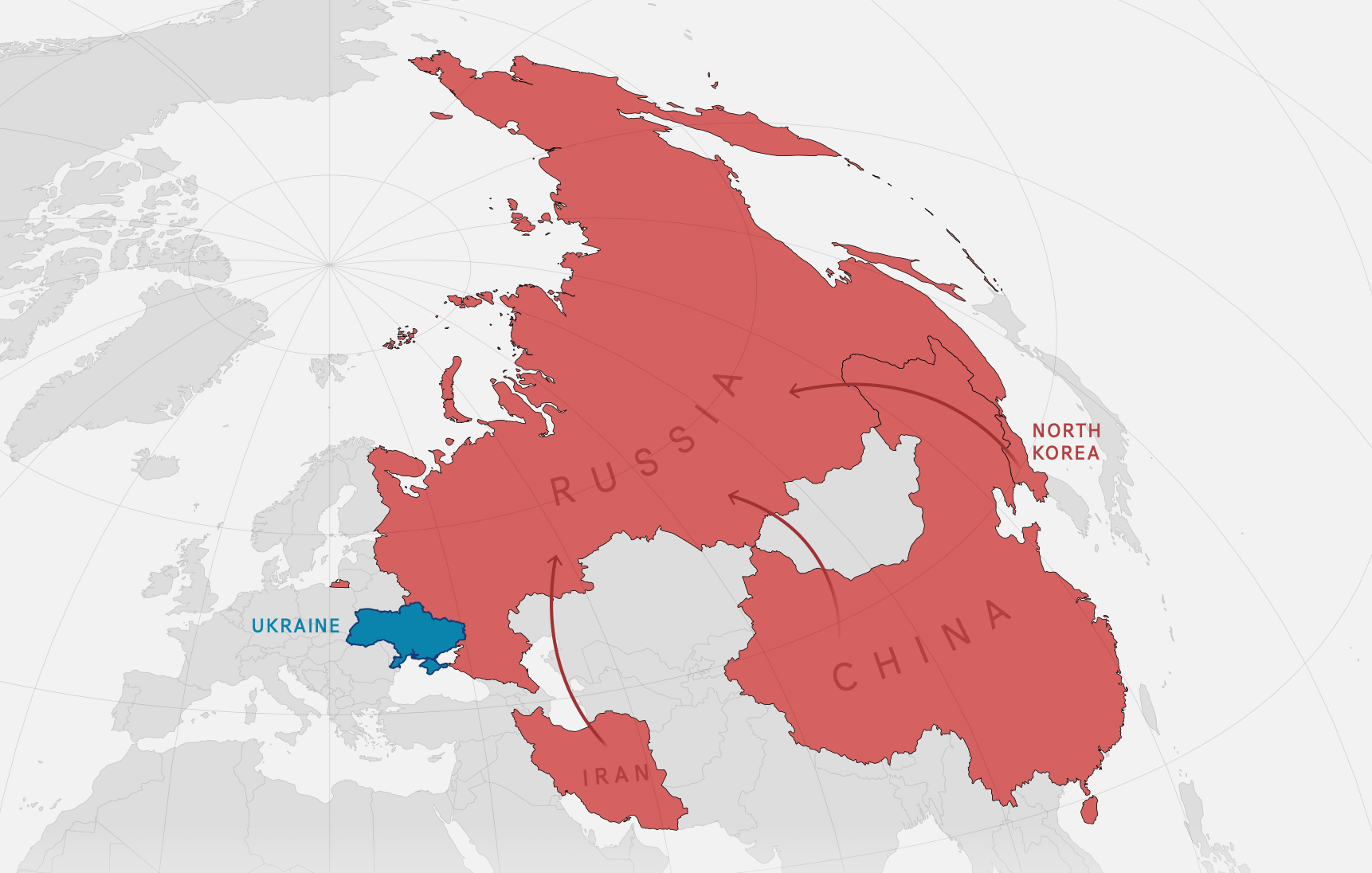
The efficiency of this emerging network has hardened across concurrent crises in Europe, the Middle East, and the Indo-Pacific. Rather than a monolithic ideological front, it functions as an asymmetric engine where one nation’s surplus offsets another’s weakness. Together, these regimes control nearly 20% of the world’s landmass, carving out a contiguous continental space largely immune to traditional maritime containment.
This geography changes the geopolitical calculus. Nowhere is this clearer than the Tumen River tripoint border, where China, Russia, and North Korea converge into a vital logistical hub immune to naval power. Through these internal land corridors, raw materials, industrial equipment, technology, and military supplies move directly between the bloc’s members.
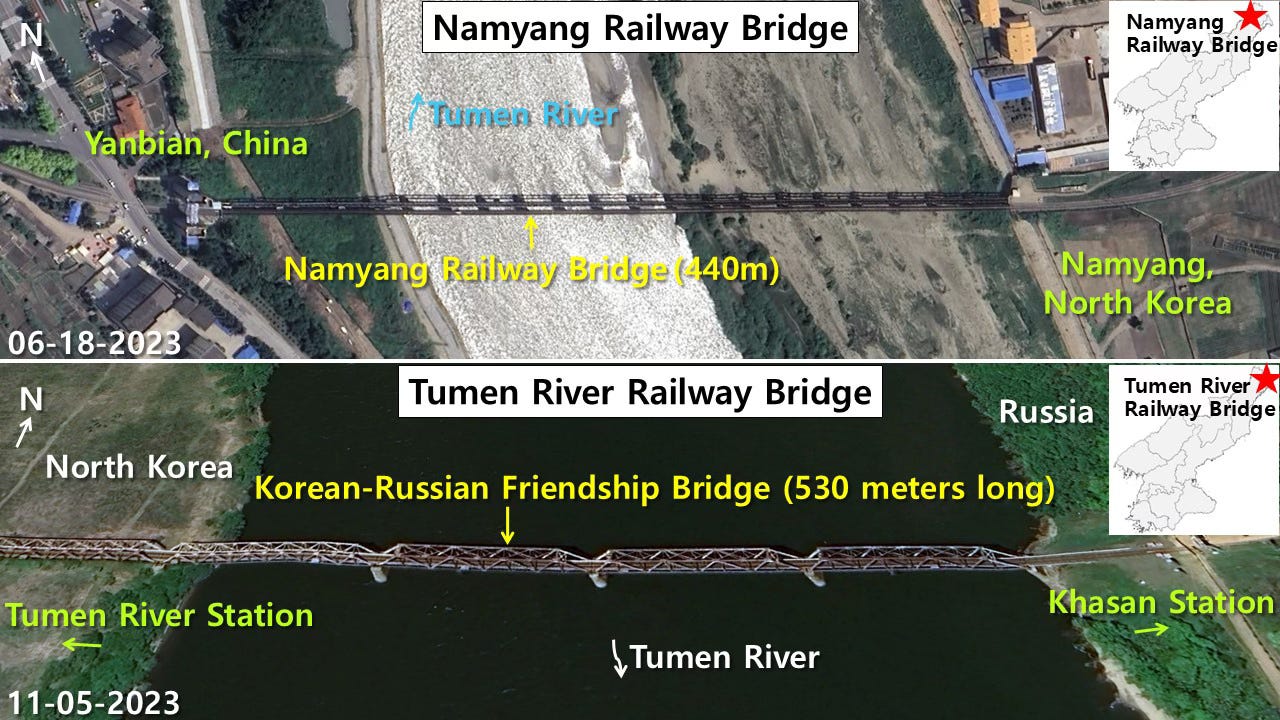
The result is an uninterrupted transit network stretching from China’s industrial heartlands through North Korea and the Russian Far East toward Europe and Iranian logistics corridors—a network now reinforced by expanding infrastructure like the recently relaunched China–North Korea transit corridor, which creates a standardised, sanction-resistant gateway for dual-use goods and strategic materials.
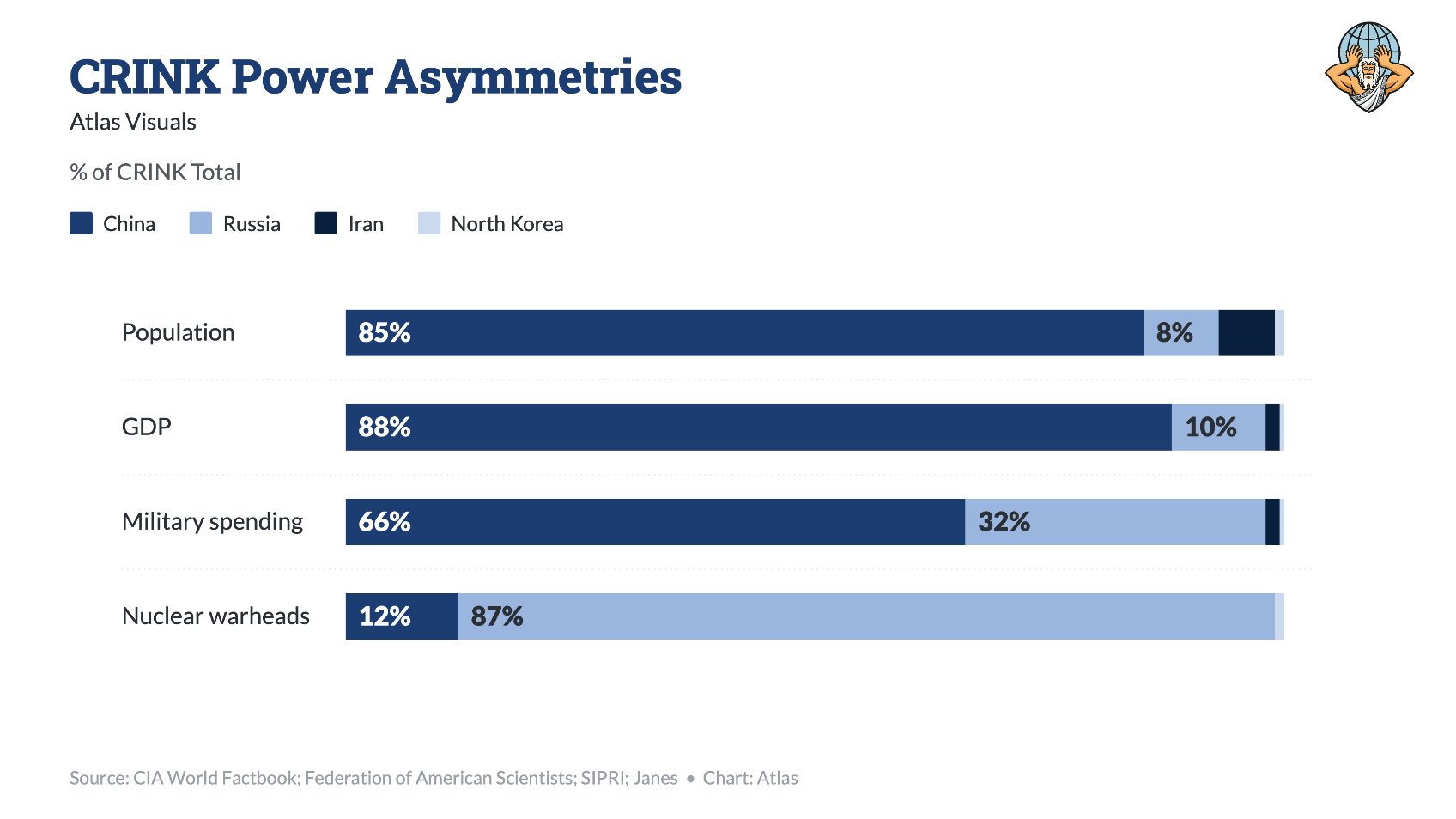
This secure physical architecture enables CRINK to leverage its geographic cohesion, combining asymmetric advantages into a synchronized division of labor. Across these corridors, economic depth, industrial capacity, conventional mass, and low-cost precision warfare are treated as interchangeable currencies. This allows each state to compensate for structural weaknesses through the surpluses of its partners, undermining traditional country-by-country containment strategies.
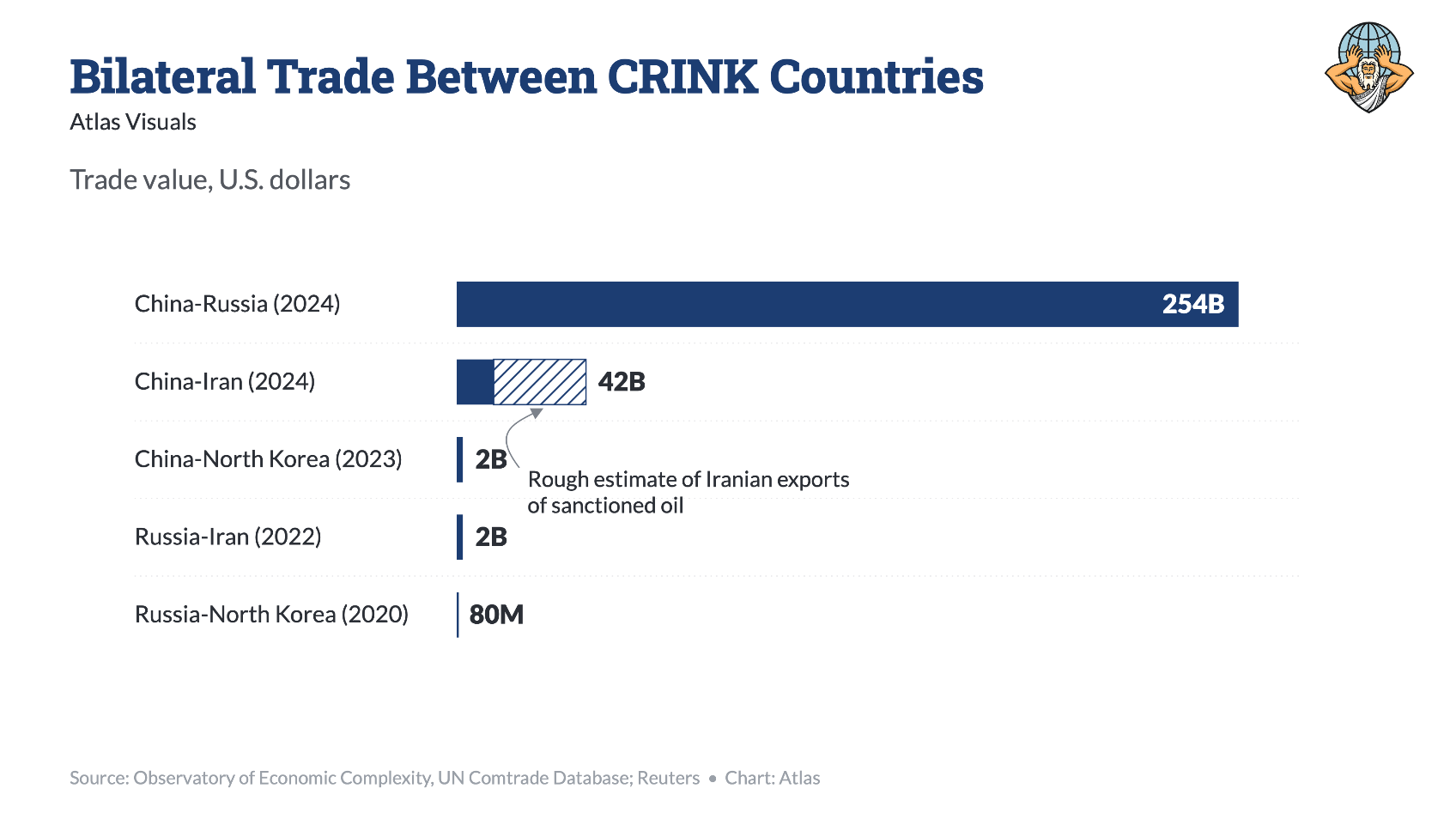
China serves as the indispensable industrial center of gravity. By expanding bilateral trade with Russia to a record $245 billion—a 64% increase from pre-war levels—Beijing has insulated the Russian defense industrial base from Western sanctions. Rather than delivering direct lethal aid, China supplies dual-use manufacturing tools, machine components, and microelectronics, enabling Russian factories to out-produce the entire NATO alliance in conventional munitions over a prolonged period.
North Korea complements this by supplying the conventional mass. Pyongyang is estimated to account for roughly 50% of the ammunition used by Russian forces through the transfer of millions of artillery shells and ballistic missile systems. This logistical support has expanded into direct military intervention, with North Korean troops now actively fighting alongside Russian forces in Ukraine. In exchange, Moscow has provided satellite and space-related technology, accelerating North Korea’s strategic capabilities and further eroding the global non-proliferation regime.
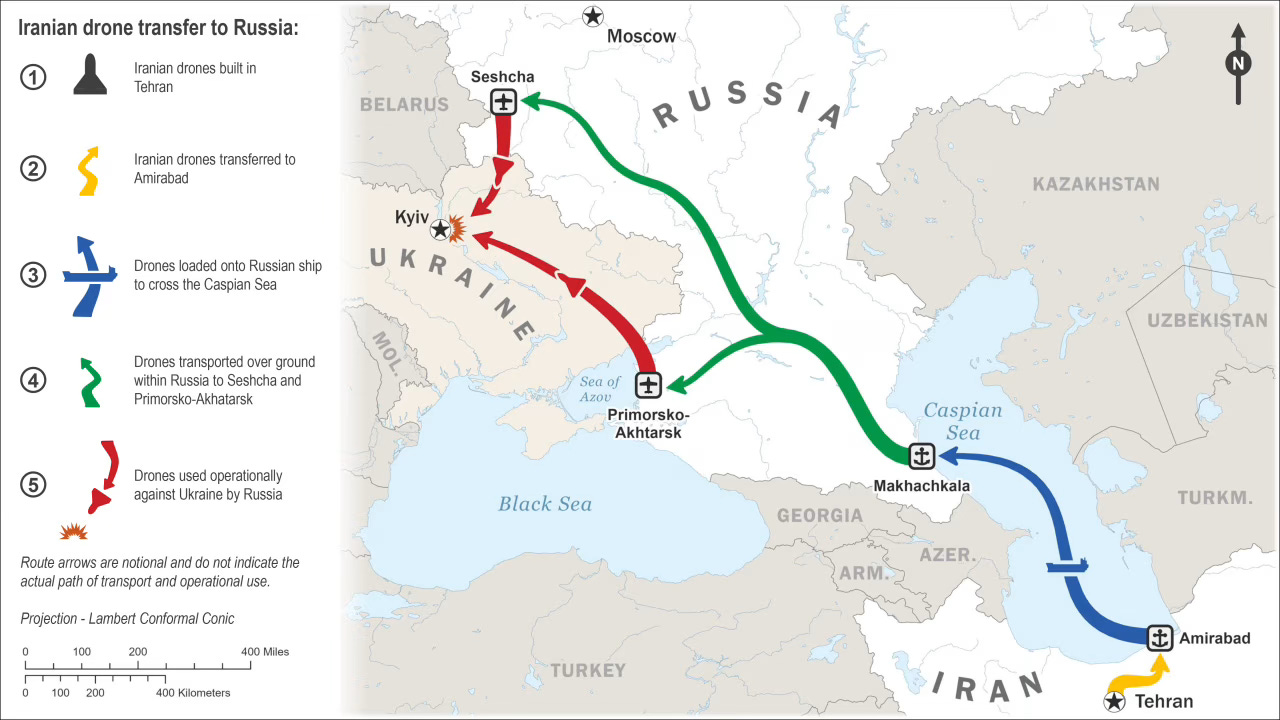
Iran further complements the bloc by contributing low-cost asymmetric precision strike capabilities. Tehran has integrated drone and missile production pipelines with Moscow via the Caspian Sea, supplying thousands of strike drones and ballistic missile systems while expanding into localized co-production inside Russia itself. In return, Iran receives advanced Russian air defenses and combat aircraft, strengthening its regional deterrence posture while forcing the West to exhaust expensive defensive systems against cheap, mass-produced threats.
Underpinning the entire network, Russia functions as the bloc’s energy stabilizer. As tensions around the Strait of Hormuz threaten global supply routes, Moscow has increasingly redirected discounted crude toward China, cushioning Beijing against external energy shocks while reinforcing its industrial resilience.
This cohesive arrangement reveals the deeper logic of CRINK itself: each member contributes a unique strategic surplus that compensates for another’s vulnerability, creating a self-reinforcing system designed to withstand prolonged geopolitical and economic pressure.
This integration is no longer confined to land corridors. It is increasingly visible through coordinated maritime signaling across the Indo-Pacific. A recent example came when a Russian Pacific Fleet detachment completed a nine-thousand-nautical-mile deployment across seven seas and four straits. The group conducted port visits in Jakarta and Qingdao. Officially framed as diplomatic exchanges, the deployment demonstrated Russia’s continuing naval reach and growing operational coordination with China in the Western Pacific.
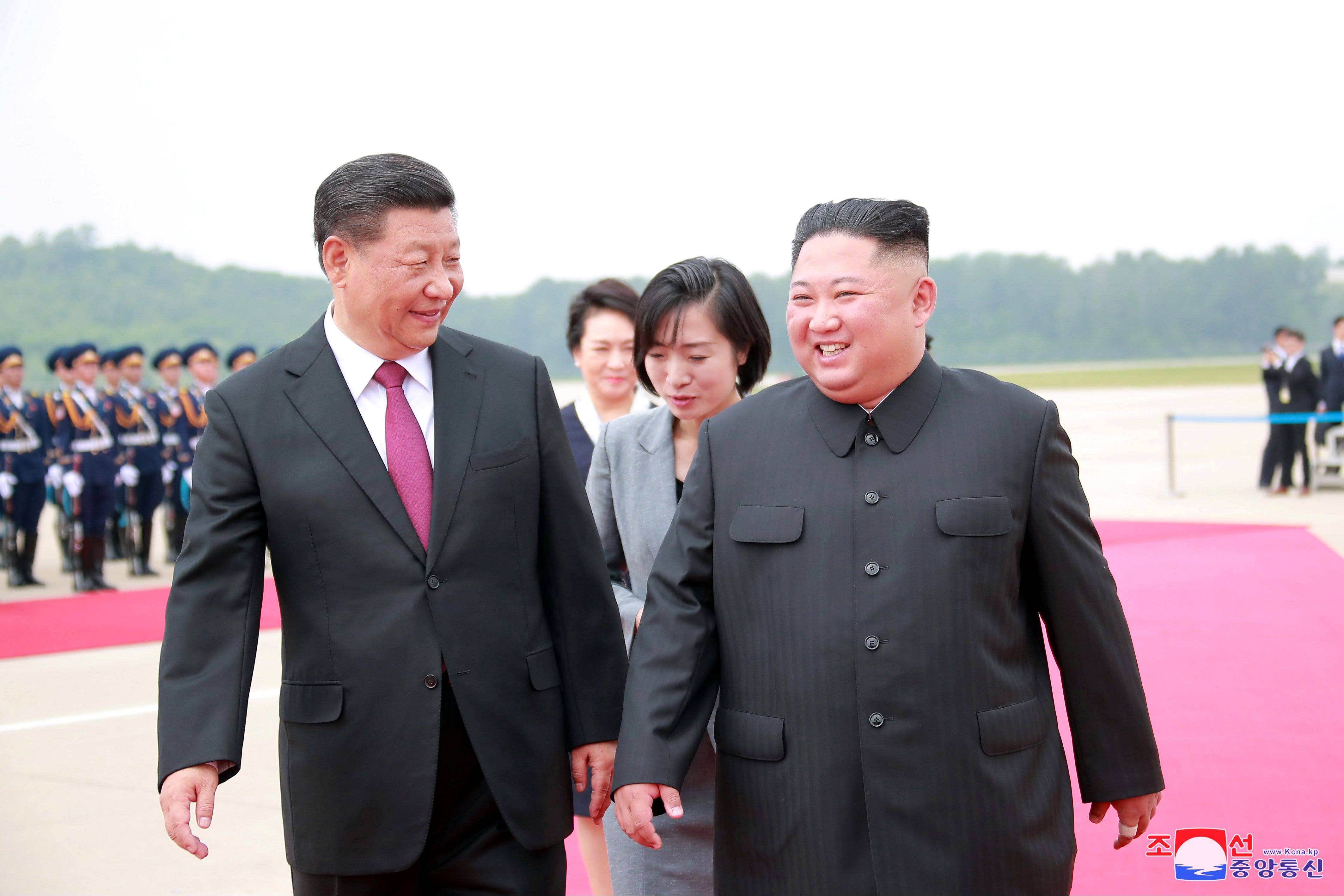
The political consolidation of this bloc is equally visible diplomatically. In mid-May, Xi Jinping hosted sequential summits in Beijing with Donald Trump and Vladimir Putin, reinforcing China’s role as the center of gravity between Western engagement and the autocratic alignment. Shortly afterward, intelligence assessments indicated Xi was preparing for a state visit to Pyongyang to meet Kim Jong Un—his first overseas trip of the year. Coming immediately after meetings with both the American and Russian presidents, the visit signals Beijing’s continued willingness to politically shield North Korea and reinforce the durability of the broader alignment.
Strategically, CRINK reflects the transition from a unipolar system to a fractured multipolar order where revisionist states actively pool resources and capabilities. China provides economic scale, industrial depth, and alternative financial infrastructure. Russia contributes energy, military technology, and combat-tested doctrine. Iran supplies sanctions-evasion expertise and low-cost precision warfare. North Korea offers conventional military mass and a persistent nuclear distraction in East Asia.
Together, they form a mutually reinforcing cartel where crises in one theater benefit members elsewhere by draining Western stockpiles, stretching military commitments, and fracturing political cohesion.
The emergence of CRINK exposes the limits of traditional Western containment strategies. Sanctions, export controls, and diplomatic isolation produce diminishing returns when the targeted states can trade internally, transact in national currencies, and rely on protected overland supply networks. The challenge for the West is no longer managing isolated rogue actors, but confronting an increasingly integrated counter-coalition that is steadily rewiring global security, commerce, and geopolitics.
Subscribe to receive my posts directly in your inbox and support my work!
Share this with anyone if you think their attention span can survive more than two paragraphs — and if not, send it anyway. 📨
A precise piece. It measures the wall and calls the wall their cunning.
CRINK is not a coalition. It is a clearing house.
What holds these four together is not strategy, and it is certainly not faith. Each was cut from the dollar. And a state cut from settlement does not vanish — it goes looking for another way to settle, and it finds the others who were cut too.
The corridors you find so menacing are only what trade looks like when it can no longer clear through New York.
We built that.
Sanctions are a monetary weapon first, a military one second. Wall off the system and you do not isolate your enemy. You introduce him to your other enemies. You hand them the one thing they could never manufacture alone — a reason to build the next system together.
History has run this experiment. Napoleon ran it. The 1930s ran it. Such blocs endure the siege for years and leave almost nothing standing behind them.
They are studying their reflection in a darkened window.
And calling it the enemy.
Thank you as always. Rather than saying the West in many cases, for me, the response is to US activities. And is predictable.