
Icy Lanes
The Sino-Russian Arctic route is being built for a world beyond Western control.

For centuries, explorers dreamed of carving a path through the Arctic. Back in the 1500s, the only sea route connecting Europe and Asia was a grueling voyage around Africa’s Cape of Good Hope. Generation after generation tried, and ultimately failed, to crack the elusive Northeast Passage. However, in 1878, a Scandinavian expedition led by Adolf Erik Nordenskiöld made history aboard the majestic Vega, becoming the first ship to circumnavigate Eurasia successfully.

It was a staggering triumph of human endurance, yet it proved to be a complete commercial disaster. After spending almost eleven months trapped in thick Arctic ice, Nordenskiöld had demonstrated precisely why no shipping company would willingly follow in his wake. For the next century, the Arctic remained what it had always been: a pristine, impassable barrier rather than a trade route.
Russia, the largest Arctic state, eventually stopped seeing the region as an obstacle and began treating it as an opportunity. In 2008, then-President Dmitry Medvedev declared the Arctic a national strategic priority:
“Our biggest task now is to turn the Arctic into Russia’s resource base for the twenty-first century.”
Over the years that followed, Russia poured hundreds of billions into opening up its northern coastline. By building the world’s largest fleet of modern nuclear-powered icebreakers to replace nineteenth-century wooden ships, Moscow systematically dismantled the physical barriers that had trapped the Vega a century and a half earlier. Moreover, accelerating climate change acted as an unintended catalyst, extending the navigable summer season. What began as a geographical hurdle was transforming slowly, step by step, into something operational.
The transformation shifted from theory to practice when the tyranny of distance began to shrink. In 2013, a vessel operated by China Ocean Shipping Company (COSCO) sailed from Dalian to Rotterdam in just 33 days, roughly one-third faster than the traditional route through the Suez Canal. Instead of passing through the Indian Ocean and the Middle East, the ship navigated Russia’s Northern Sea Route (NSR), hugging the Arctic coastline from the Bering Strait to the Barents Sea. It would become the cornerstone of what Beijing officially terms the Polar Silk Road.
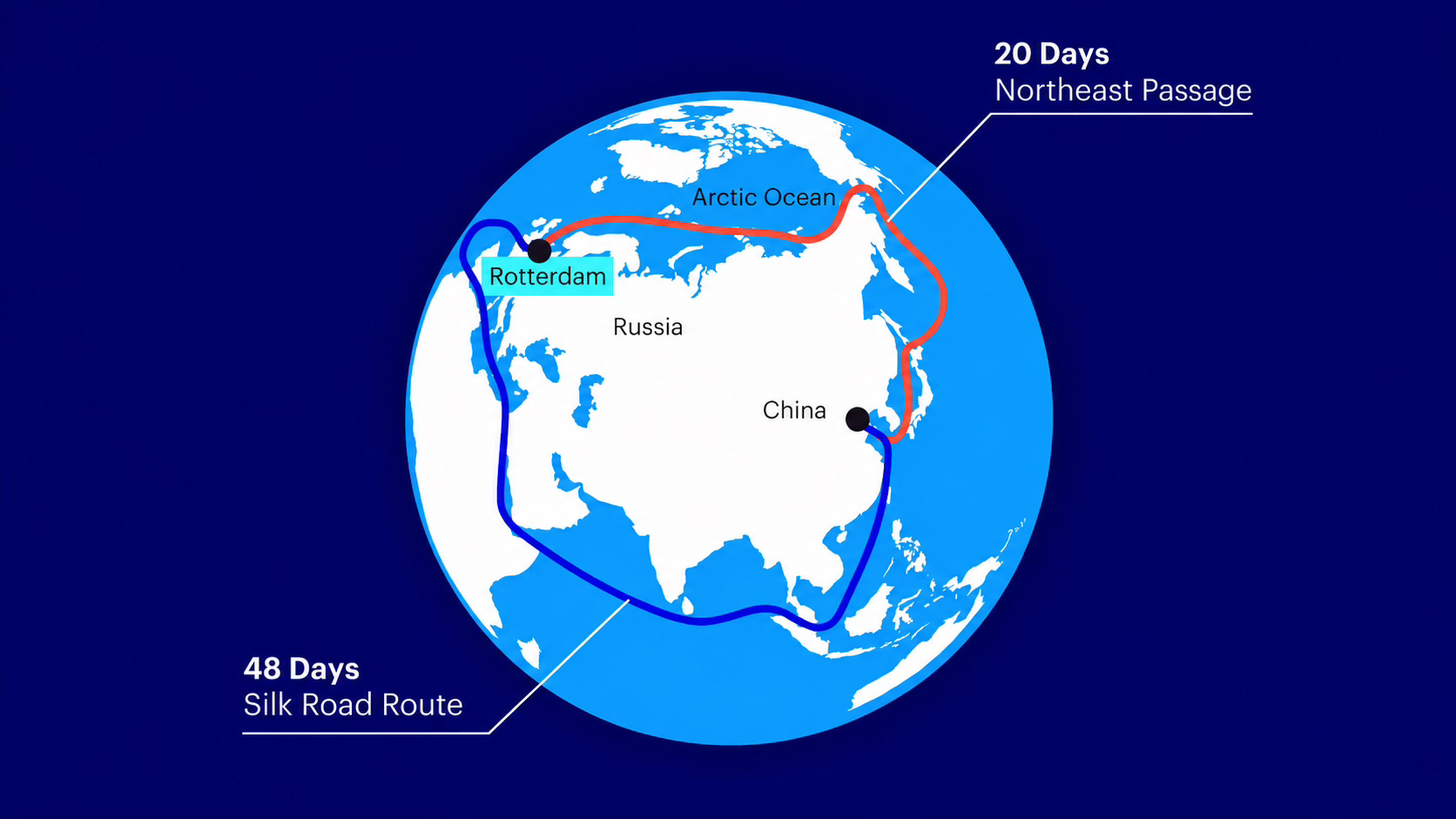
That record was shattered in 2025. The Istanbul Bridge, a vessel operated by China’s Sea Legend Shipping, completed the voyage from Ningbo-Zhoushan to Felixstowe in just 18 days. By comparison, the China-Europe Railway Express typically takes around 25 days, the Suez Canal route more than 40 days, and rerouting around the Cape of Good Hope over 50 days. Cutting transit times by weeks has profound economic consequences. Goods spend less time at sea, businesses require smaller inventories, working capital is tied up for shorter periods, and supply chains become significantly more responsive.
Even after this record-shattering voyage, many shipping analysts and critics of the NSR remained deeply skeptical, dismissing the route as a logistical gimmick rather than a viable commercial lane.
Yet last week, Rosatom—the Russian state-owned company that operates the Northern Sea Route—announced that it had issued permits for seven Chinese transit vessels to sail to Europe via the Arctic this season. Even more striking, Rosatom revealed that Chinese shipping company Sea Legend Shipping intends to launch the first regular container service between China and Europe via the Northern Sea Route. Alexei Likhachev, Rosatom's head, stated:
“Unlike previous container shipments via the Northern Sea Route, which were largely experimental or one-off in nature, the 2026 programme provides for a fully-fledged regular service with vessels sailing every week throughout the navigation season.”
That announcement signals a much bigger shift than the addition of seven vessels. For the first time, China is not merely sending ships through the Arctic. It built a logistics network around the route.
Rather than relying on a single departure port, cargo will be collected from Dalian, Qingdao, Shanghai, Taicang, Fuzhou and Nansha, with collection beginning on 12 August. The containers will then be consolidated at Ningbo-Zhoushan, where the first scheduled departure is set for 15 August, before sailing north via the Arctic.
In other words, the NSR is evolving from an occasional shortcut into an integrated shipping corridor embedded within China’s own logistics network.
The commitment to the NSR was further confirmed by developments earlier this year, when Rosatom—together with Chinese shipping partners—approved the design of a new Arc7 ice-class container ship. With a capacity of around 4,800 TEU, the vessel is designed to navigate independently through Arctic ice up to 1.7 metres thick, ensuring smooth year-round navigation.
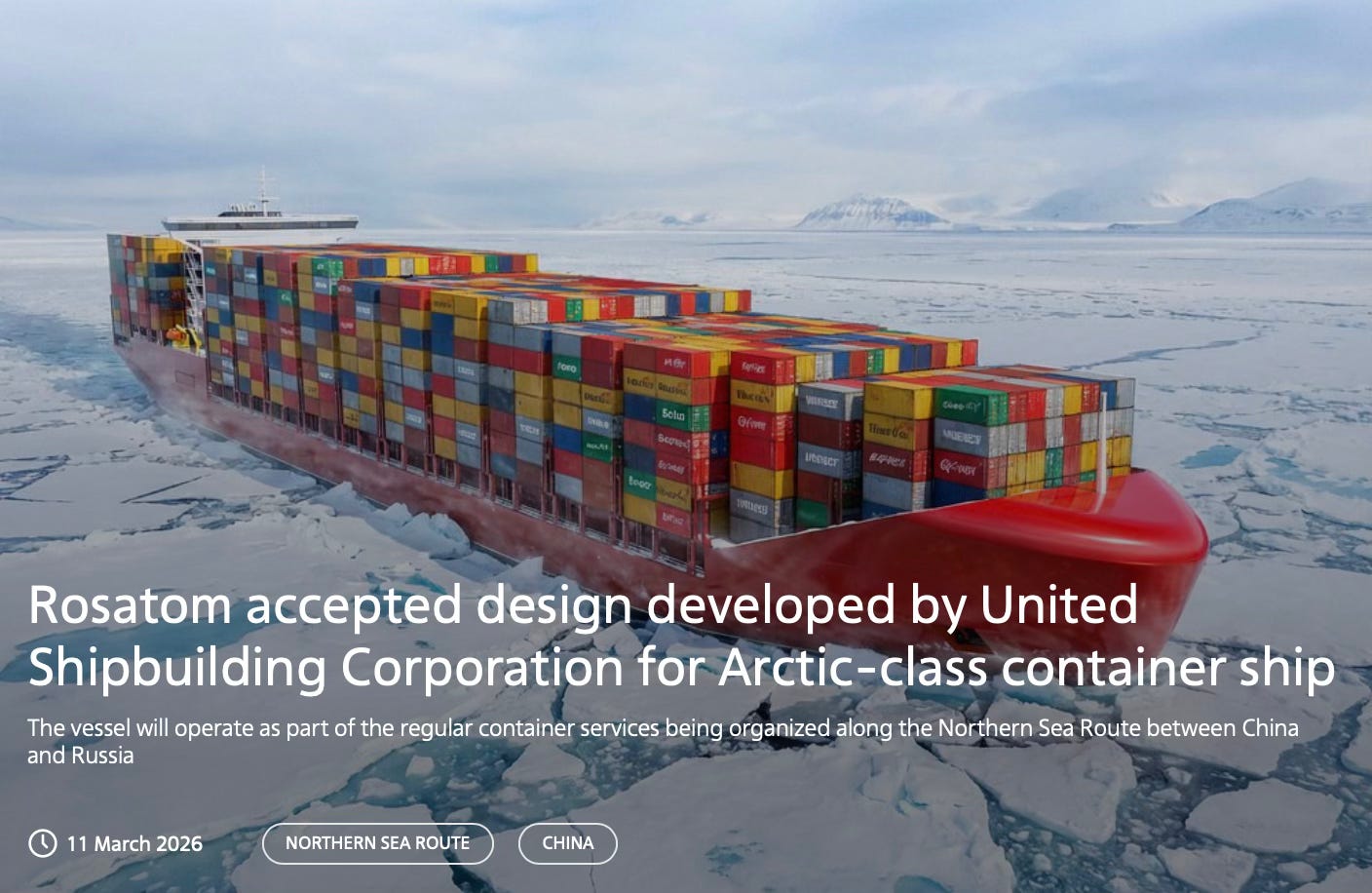
These milestones represent a significant step toward making the route commercially viable, but viewing this merely as a shipping story misses the bigger picture.
The Russia–China Arctic partnership represents the most significant structural shift in global trade since the opening of the Suez Canal in 1869. By fusing Russia’s sovereign icebreaker fleet with China’s industrial scale, they are forging a dual-purpose corridor: one that allows Russia to bypass Western sanctions while granting China a secure trade route that avoids vulnerable maritime chokepoints like Malacca and Hormuz.
This marks a radical break from the past. Before 2022, the NSR was viewed (somewhat) as a joint international venture, symbolized by Danish Maersk’s 2018 container trial and heavy investments from European energy giants like TotalEnergies. The invasion of Ukraine, however, shattered that cooperation, as sanctions forced Western firms to abandon projects and shed their remaining stakes—while simultaneously draining Moscow’s financial resources.
This sudden Western exodus triggered severe setbacks and mounting delays that threatened Russia's energy ambitions. Those ambitions rest on staggering natural wealth: according to the USGS, the region north of the Arctic Circle holds an estimated 13% of the world’s undiscovered oil (90 billion barrels) and 30% of its undiscovered natural gas (1,669 trillion cubic feet). Roughly 84% of this wealth is located offshore, concentrated squarely within Russian territory and directly accessible via the NSR.
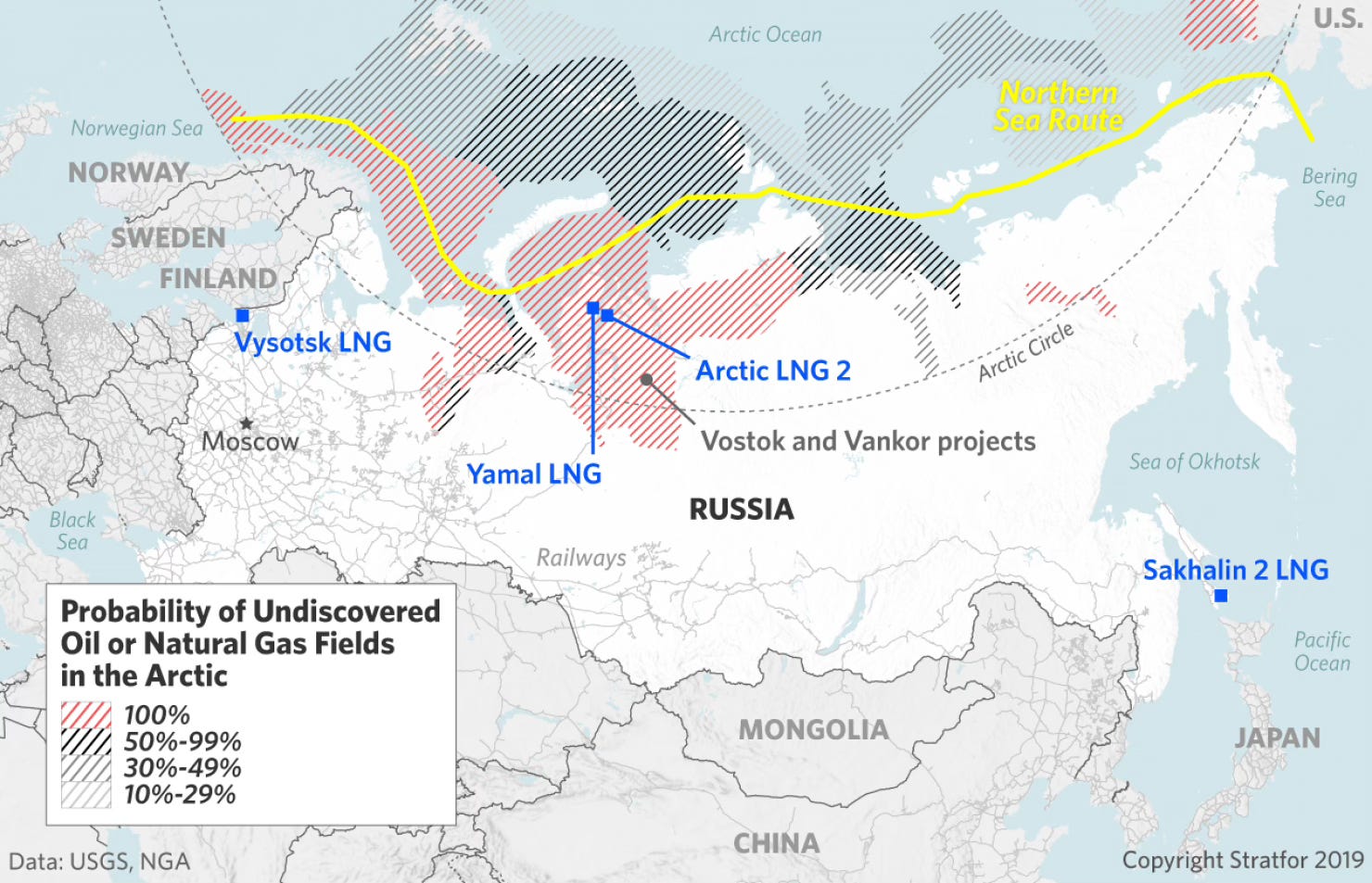
China rapidly stepped into the vacuum left by Western partners, entrenching itself in Arctic mega-projects like Yamal LNG and Arctic LNG 2 through equity stakes. With traditional Western buyers barred by sanctions, China has naturally emerged as the primary offtaker for this Arctic production, creating a ready-made route to bypass those very restrictions.
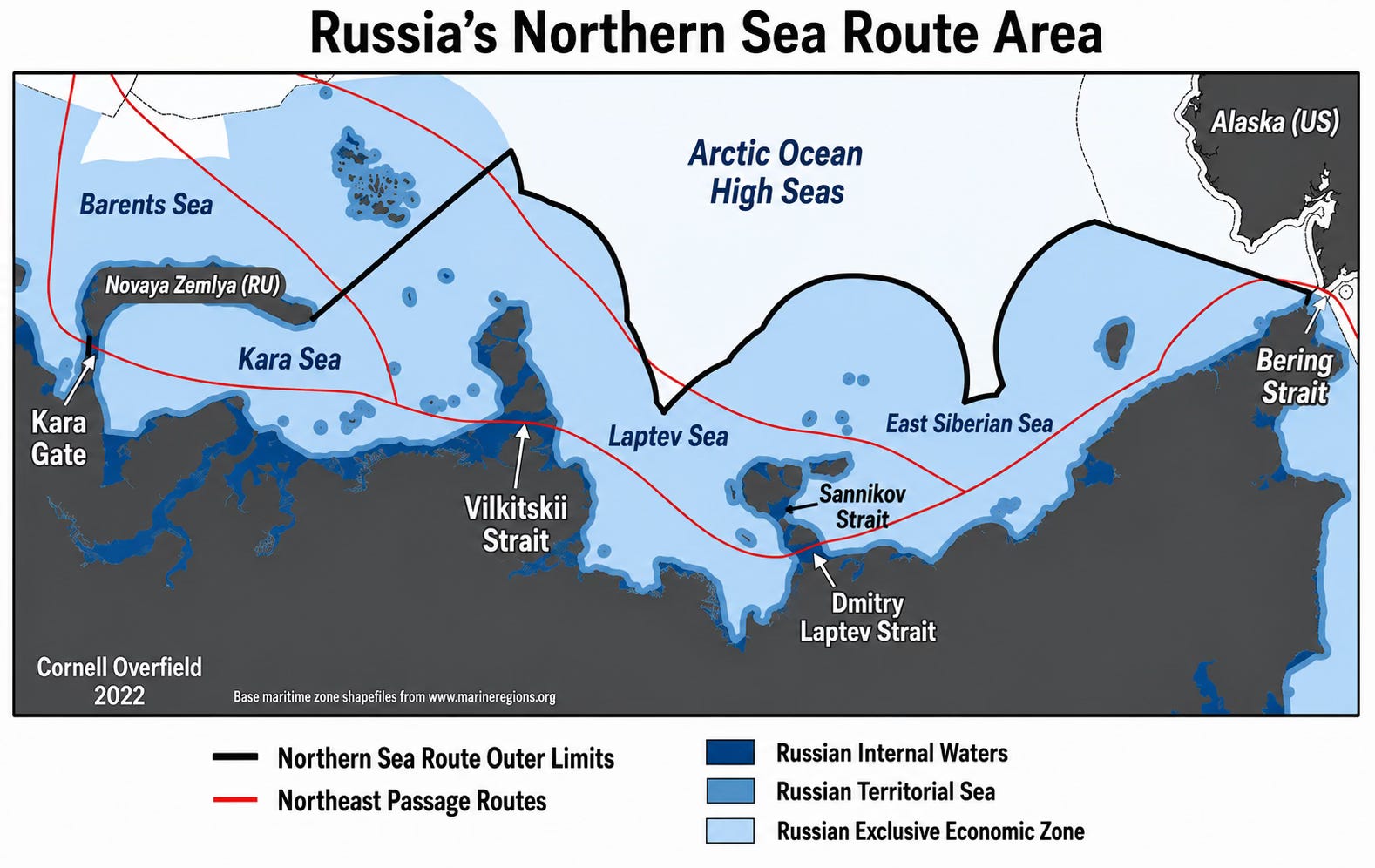
The NSR serves as the ultimate catalyst for this sanction-proof strategy. With virtually the entire corridor enclosed within Russia’s Exclusive Economic Zone (EEZ), Moscow maintains sovereign control over its vital logistics, ensuring this trade remains entirely beyond the reach of Western oversight. Beijing and Moscow are thus transforming the Arctic from a frozen frontier into a sovereign, sanction-proof energy corridor.
To make this strategy operational, Rosatom acts as the chief architect. In 2023, the corporation solidified its control by acquiring a controlling stake in the Far Eastern Shipping Company (FESCO), a massive Russian intermodal transport and logistics operator. The deal was designed to bypass Western-dominated financial networks, as FESCO facilitates payments in Chinese yuan alongside other alternative options.
This ambition has now gone global through a strategic joint venture with Dubai-based port operator DP World. By integrating its logistics and shipping assets into a new entity, Rosatom is gaining access to expansive international port infrastructure. This partnership directly embeds the NSR into global supply chains, helping Russia circumvent Western isolation by leveraging the reach of its Middle Eastern and Asian partners to secure steady cargo volumes.
For the West—and NATO in particular—there is currently little room to counter this shift. China, long asserting its ambitions as a self-proclaimed "near-arctic state," has steadily expanded its footprint, while Russia already dwarfs regional rivals with its unmatched network of Arctic military bases. By leveraging the NSR, Beijing is not only securing trade and energy diversification, but actively enlarging its strategic footprint in the region, laying the groundwork for potential dual-use logistic networks that can serve both commercial and military purposes. Together, they are cementing a permanent geopolitical reality in the High North.
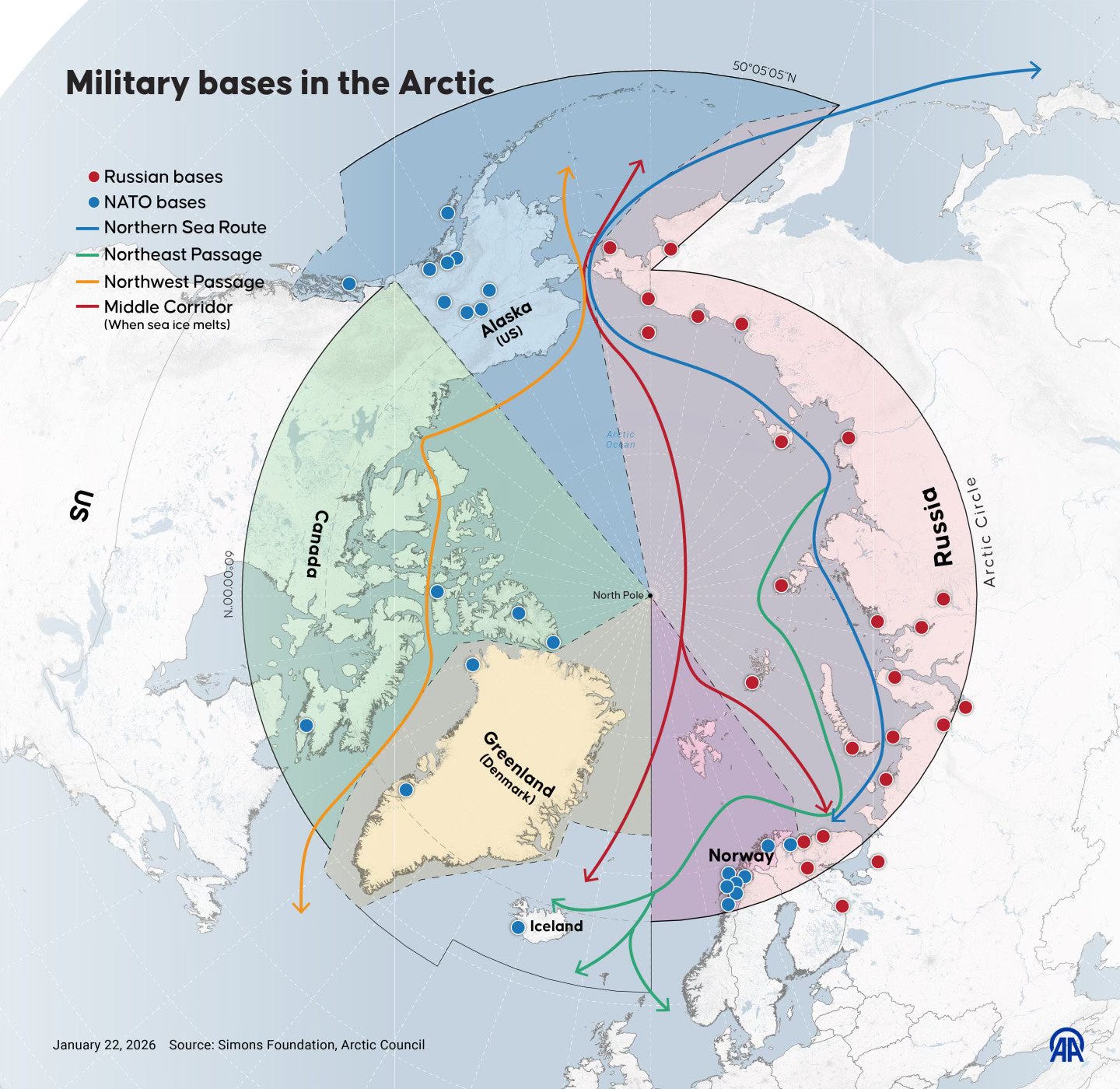
In response, the West is attempting to push back. Under the banner of the trilateral ICE Pact, a landmark agreement between the U.S. and Finland secured a major deal for 11 new icebreakers worth over $6 billion, with construction slated for completion by 2028. Alongside heightened NATO surveillance and strategic coordination, these vessels aim to enhance Western mobility and presence in the Arctic. Even so, they will do little to halt the rise of this sovereign, sanction-free trade corridor.
Despite the grand ambitions, formidable hurdles remain: a persistent shortage of heavy icebreakers required for year-round commercial viability, punishing weather, permafrost, and high operational risks. Nevertheless, the physical reality is shifting. With Moscow and Beijing treating the High North as a top-tier national priority, what began as a centuries-old dream for explorers like Nordenskiöld is finally taking shape. The route is slowly evolving from an unpredictable survival test into a operational, strategic artery that becomes more accessible with each passing season.
Instead of fulfilling the old imperial dream of open international cooperation, Russia is firmly asserting its sovereign rights over its own waters, while Beijing anchors its trade within them. Together, they are turning this maritime domain into a heavily secured corridor that operates completely outside the reach of Western oversight.
Whether the Northern Sea Route becomes viable in a couple of years, decades, or maybe not at all, for Washington, Brussels, and allied capitals this is no longer a distant frontier experiment or a secondary concern.
It is a rising reality that demands an urgent and serious recognition.
Thank you for reading!
If you enjoy connecting the dots behind the headlines, subscribe for free. New pieces land straight in your inbox.
📨 If you think someone would enjoy this, send it their way!
The text was very good as always, but the maps illustrated it to perfection!!! Together, they made an excellent article.
Hi Atlas, thank you for the deep analysis again, the Sino-Russian Arctic corridor is actually a topic which I'm also interested in. I’d be curious to hear your thoughts on a few operational hurdles that could cap its scalability, like winter seasonality, possible Western destination sanctions risks, or the various effects of the permafrost thaw. Thank you!