
Mountain Fulcrum
Water is raising the stakes between a small Himalayan state and Asia’s Giants.

Twenty megawatts is barely a rounding error in South Asia’s electricity market. Yet, last month, it exposed the geopolitical predicament of a small Himalayan state.
Nepal wanted to increase electricity exports to Bangladesh from 40 to 60 mW, while Dhaka wanted the power. However, the countries do not share a border. India sits between them, and New Delhi withheld approval for the exports due to transmission line capacity constraints. A month later, the tide had turned. Indian and Nepalese officials met in Pokhara to deepen cooperation on hydropower and electricity trade, expanding an energy relationship both governments want to grow over the decade.
Nepal seemed to loosen India’s grip while moving closer to it. To understand why, one must look beyond those 20 megawatts and examine the older game Nepal plays between its giant neighbors.
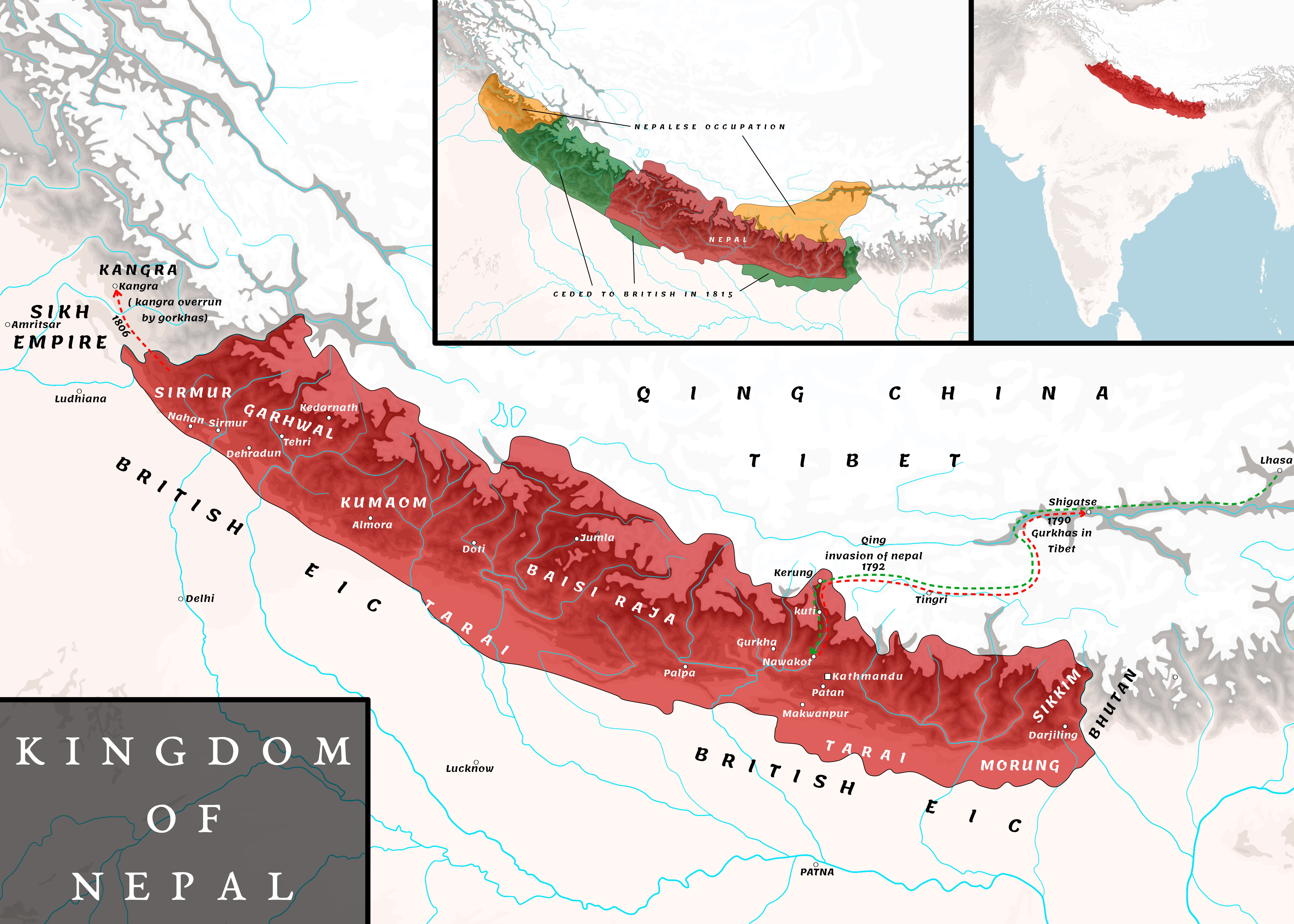
Indeed, this was a new version of a familiar problem for Nepal. During the Anglo-Nepalese War of 1814–1816, the expanding Gorkha Kingdom fought the British East India Company in the Himalayan mountains. The war eventually ended with the signing of the Treaty of Sugauli, forcing Nepal to surrender roughly a third of its territory. Nepal remained independent after the war despite loss of strategically important regions such as Kumaon and Garhwal. To the south, British India continued to extend its influence, whereas relations with the north were maintained by the adjacent Qing administration of Tibet. Even though Nepal could not equal the power of either of these larger states, its geographic position conferred sufficient strategic advantage to permit some degree of maneuver.
That predicament was recognized decades earlier by the founder of modern Nepal, King Prithvi Narayan Shah. As he described his country:
“a yam between two boulders.”
The metaphor proved durable.
Eventually, British India became independent India and the Qing dynasty gave way to the People’s Republic of China and its control over Tibet. Nepal remained wedged between the Indian plains and the Tibetan Plateau, turning that position into foreign policy. India was inevitable. The country surrounds Nepal on three sides and provided access to trade, fuel, ports and employment. China was beneficial as well, simply because it’s not India. Beijing provided Kathmandu with capital, infrastructure and political support. Whenever dominance shifted to New Delhi, Nepal could just go to its other neighbor. The result was always an effort to avoid choosing between the two countries.
Former Nepalese Prime Minister K.P. Sharma Oli built his political identity around that balance. After relations with India deteriorated during the 2015 border crisis, his government moved closer to Beijing, signing a transit agreement to reduce dependence on Indian trade routes. Tensions intensified further over the disputed Kalapani-Lipulekh-Limpiyadhura region, which Nepal boldly incorporated into its official map in 2020. China quickly emerged as a reliable counterweight, while ambitious Belt and Road projects offered Kathmandu a lucrative economic opening to the north.
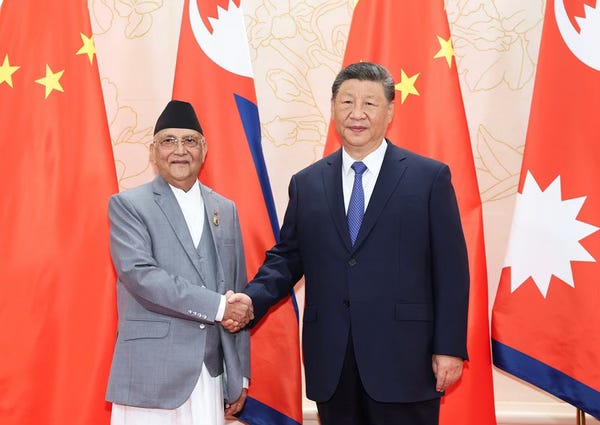
However, by 2025 that fine-tuned strategy proved increasingly difficult to sustain as India and China quietly began repairing their fractured relations after years of confrontation. When the two Asian giants formally agreed to resume border trade through Lipulekh, Nepal naturally protested. Oli raised the issue directly with Xi Jinping, only to discover that Beijing had little incentive to let Nepal’s territorial dispute interfere with its broader rapprochement with New Delhi. In fact, India-China border trade via Lipulekh is cleared to resume in August after a pause of more than six years.
Consequently, this episode exposed an uncomfortable hierarchy: China could certainly help Nepal balance India, but Nepal could never blindly assume China would prioritize Kathmandu over its own vital national interests.
Domestic politics then shifted dramatically. The Nepalese Gen-Z protests against widespread corruption and a sudden social-media ban erupted in September 2025, creating a backlash so intense that it forced Oli from office. An interim government quickly followed, parliament was dissolved, and sweeping elections reshaped the political landscape in early 2026.

Consequently, Nepal entered 2026 between neighbors whose relationship was changing, amid a domestic political reset. Yet, the new government quickly returned to a familiar strategy. Last month, Foreign Minister Shisir Khanal made his first official foreign visit to India. Barely a week later, he travelled to Beijing for talks with Wang Yi, where Nepal reaffirmed its One China policy while courting Chinese investment.
The government has changed, but Nepal’s geopolitical calculus has not.
This context explains why the June and July developments matter more than the electricity involved. Bangladesh should offer Nepal another option, but the attempt to expand trade encountered the same geography Nepalese governments have spent decades trying to escape. Weeks later, Nepal was deepening its energy relationship with New Delhi anyway. Nepal wants alternatives to India, but increasingly needs India.
The reason lies in what descends from the Himalayas.
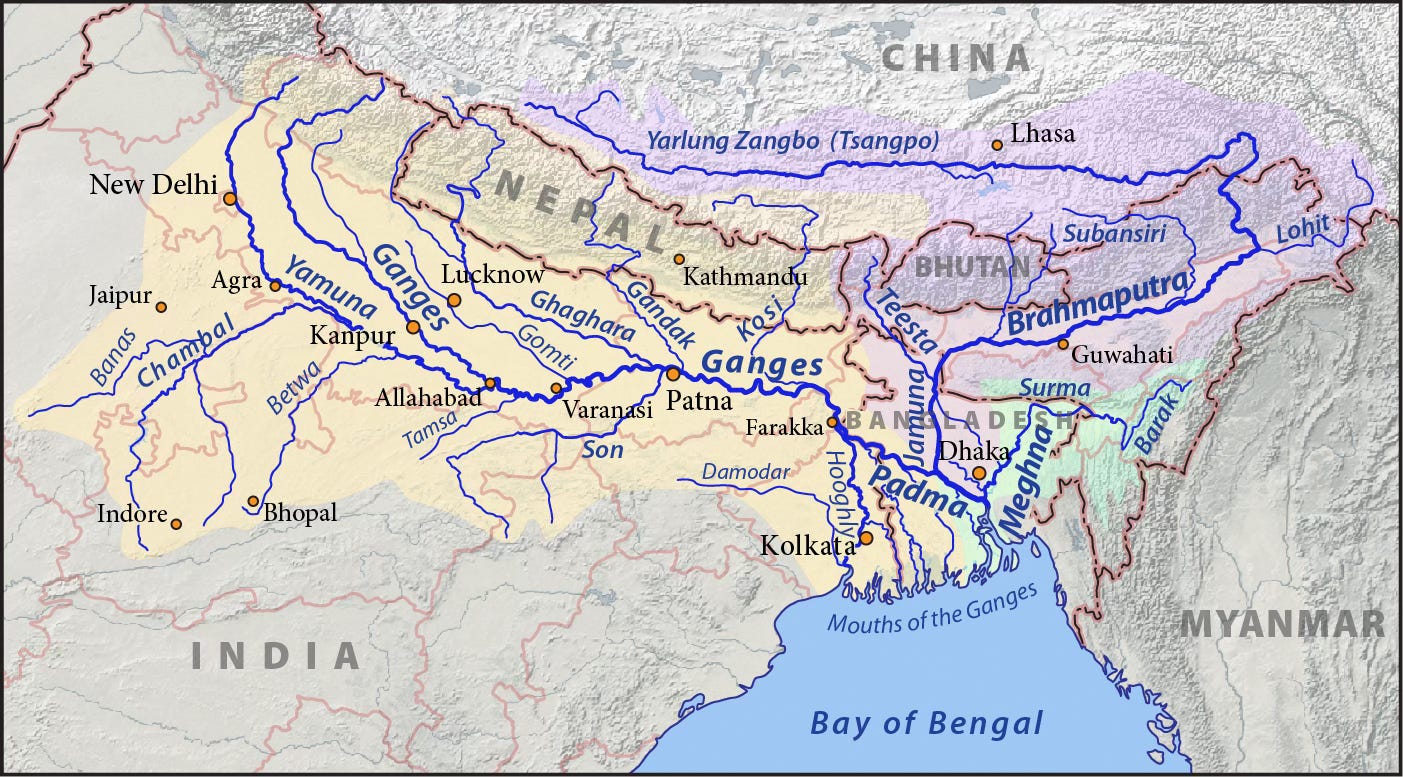
Nepal has no oilfields or gas reserves; instead, it possesses an abundance of water with over 6,000 rivers coursing through the country, concentrated primarily around the Koshi, Gandaki, and Karnali basins before feeding the mighty Ganges. Nepal’s theoretical hydropower potential is estimated at roughly 83,000 megawatts, with 43,000 megawatts considered economically feasible. For decades, those figures remained theoretical. Mountainous terrain, political instability, limited capital, and weak infrastructure meant rivers generated little economic value before flowing south.
Fortunately, that reality is rapidly changing.
According to a statement published last week by the Nepal Electricity Authority, Nepal exported 3.877 billion kilowatt-hours of electricity to India and Bangladesh in the 2025/26 fiscal year, up from 2.383 billion. Export earnings reached a record $189.84 million, a nearly 68% increase. Nepal still imports Indian electricity during the dry season because its run-of-river system produces less in winter, yet the broader transformation is clear.
Hydropower is becoming an industry capable of giving a nation of 30 million people strategic importance beyond its economy.
Crucially, China is largely driving this success. The rivers are part of China’s strategy along southern Tibet. For years, Beijing has worked to turn the Himalayas into a gateway by investing in roads, crossings, trade, and infrastructure. Hydropower adds a layer to this vision, cementing economic ties south of the plateau—a focus that was highlighted in a promotional video by state-owned New China TV showcasing various projects in Nepal.
Most of Nepal’s trade, infrastructure and energy links have historically pulled south toward India. These Chinese investments create a competing direction, tying parts of Nepal’s future growth to capital and infrastructure arriving from across the Tibetan frontier.
Nevertheless, China and India view Nepal’s rivers differently. Pradeep Kumar Gyawali, Nepal’s former foreign minister, once captured the distinction:
“China sees Nepal’s water resources through the lens of development and it is a money-making business for them. But for India, it’s a strategic resource and is an issue of security so water is far more important to them.”
Unsurprisingly, that stark distinction is far from trivial.
While Beijing brings capital and raw construction power, New Delhi brings the ultimate prize: a living market. As the primary buyer of Nepalese electricity, India makes itself indispensable to Kathmandu’s economy.
Nowhere was this difference in strategic interests more glaring than in the saga of the 750-megawatt West Seti project. After Chinese firms repeatedly abandoned the initiative due to financial unviability, Nepal handed it straight to India’s NHPC—a script repeated down to the letter with the 450-megawatt Seti River-6 project. These events laid bare a reality: Nepal could happily invite Chinese hands to pour concrete, but the power itself inevitably flowed south. India cemented this geographical destiny in 2024 by locking in a landmark pact to import 10,000 megawatts of Nepalese electricity over the coming decade.
This dynamic represents both an immense opportunity and a hidden vulnerability for Nepal. On one hand, India provides the vital demand required to transform rivers into a thriving export industry. Yet, on the other hand, an energy sector built entirely around Indian customers risks recreating dangerous dependency. Thus, China still remains uniquely valuable because Chinese capital gives Kathmandu essential alternatives, meaning that Chinese infrastructure keeps the northern frontier relevant, while Beijing’s heavy presence provides much-needed bargaining power with New Delhi.
Yet, the Himalaya is only part of a much larger water story.
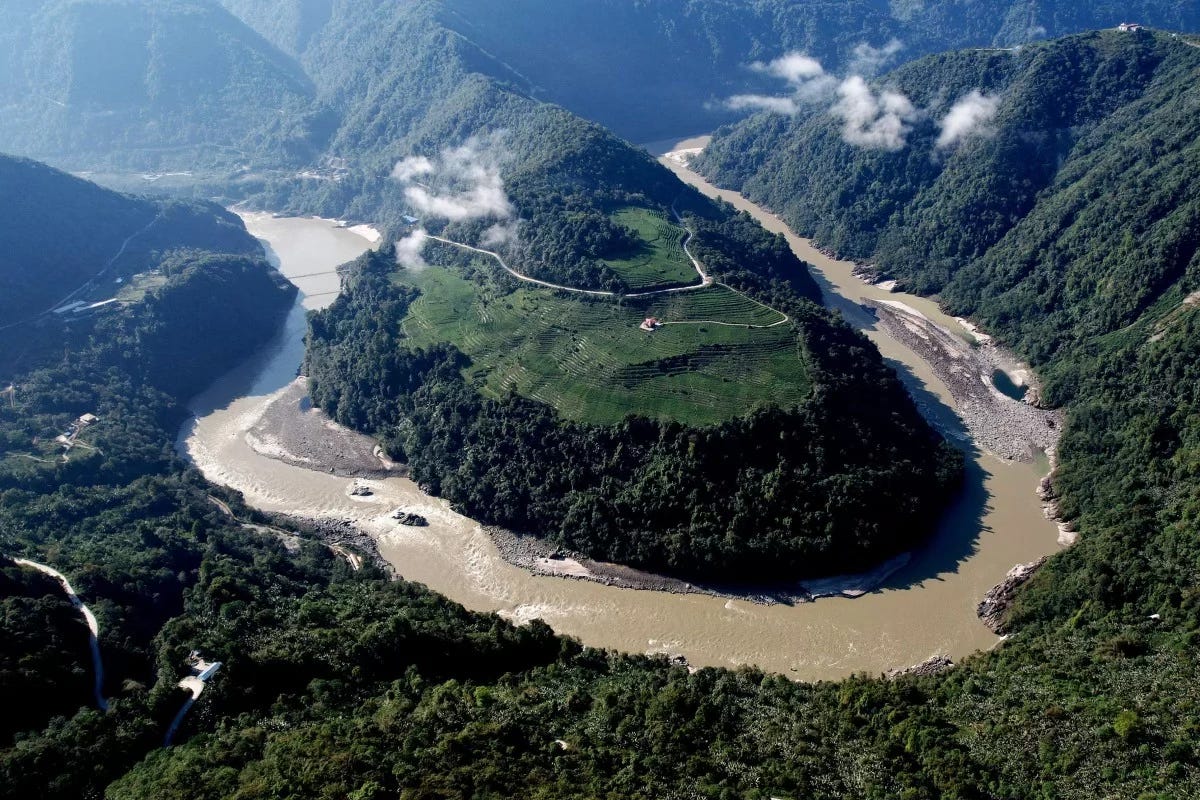
The strategic positions reverse eastwards. Measured at 1,800 miles long, the Yarlung Tsangpo — nicknamed The Everest of Rivers — crosses the Tibetan Plateau before turning around the eastern Himalayas and entering India as the Siang, forming the Brahmaputra. In July last year, China began construction of a hydropower complex on its lower reaches at the river’s “great bend”. The complex is estimated at an astonishing $170 billion, and will consist of five stations producing 300 billion kilowatt-hours annually, roughly triple the Three Gorges Dam, which is currently the largest hydro-project on earth.
But this is not just another China mega-project.
“It is going to cause an existential threat to our tribes and our livelihoods. It is quite serious because China could even use this as a sort of water bomb.”
Pema Khandu, Chief Minister of India’s Arunachal Pradesh state, may have put it dramatically, but the underlying concern is real. The project poses a profound strategic risk for India.
China sits upstream, while northeastern India and Bangladesh lie downstream. Beijing maintains that the project will not harm downstream countries and that China cannot switch off the Brahmaputra, since downstream flows rely heavily on rainfall outside Tibet. Still, infrastructure of that scale gives Beijing a role in hydrological data and reservoir management. India has raised concerns with China.
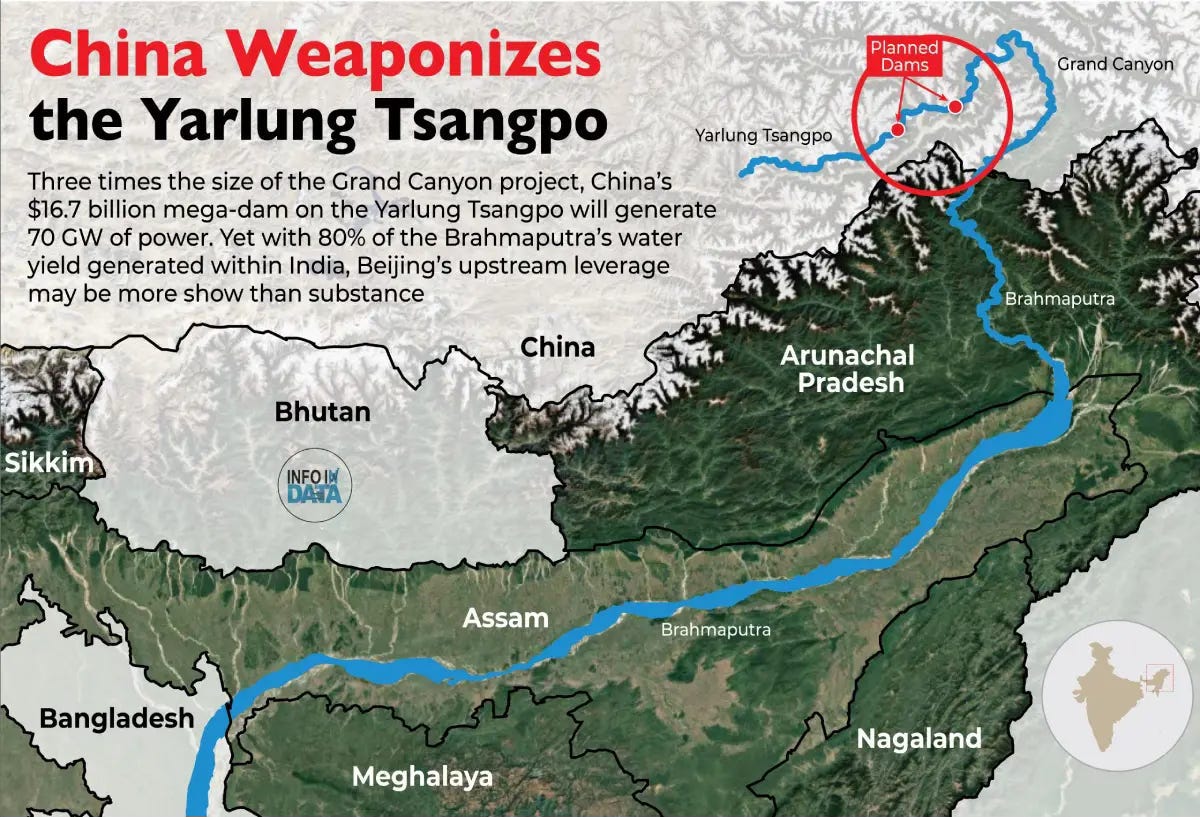
This reality establishes a fascinating reversal across the Himalayas. On the Brahmaputra, China holds the upstream advantage while India watches Beijing build infrastructure beyond its control. In Nepal, India sits downstream yet holds the market capable of turning water into economic value. Chinese involvement in Nepal matters beyond individual dams; India faces a powerful China upstream, leaving little incentive to allow Beijing to dominate Nepal’s river systems.
Caught in the middle of all this, Bangladesh sits at the end of both complex equations. The Brahmaputra reaches Bangladesh from China through India, while Nepalese electricity reaches Bangladesh only through Indian territory. Dhaka wants Himalayan hydropower because its energy system relies on imported fossil fuels, while Nepal wants Bangladesh to reduce Indian market dependence. Yet, the 20 megawatts denied in June revealed diversification limits.
Compounding matters for Dhaka, there’s another uncertainty looming. The 1996 Ganges Water Sharing Treaty is set to expire in December 2026. The treaty governs the transboundary Ganges River, providing roughly 31% of Bangladesh’s annual surface water inflow from upstream. This leaves Dhaka scrambling to secure its vital dry-season water supply against Indian control. Bangladesh can be a customer, but it cannot change geography.
Faced with these realities, Nepal inevitably reverts to its time-tested strategy: keeping all major players interested. While New Delhi absorbs the power Nepal cannot consume, Beijing remains the vital counterweight preventing total economic capture, and Bangladesh adds an alternative customer.
Two centuries after Sugauli, Nepal’s basic strategy has barely changed. It remains a yam between two boulders, unable to dictate their behavior yet valuable enough to prevent dismissal. What has changed is what those powers want from the Himalayas. Mountain passes once made Nepal useful as a buffer.
Today, the descending rivers turn the country into an energy prize between two Asian giants.
Thank you for reading!
If you enjoyed this piece, consider subscribing for free to receive my posts directly in your inbox and support my work.

📨 If you think someone would enjoy this, send it their way!
Very informative and as always I’m learning a lot from your posts/articles. It also shows why geography plays such a big role in the lives of pretty much everyone.
Sucks to be Nepal. Will hydropower strengthen Nepal between to large powers? Or make it an objective worth capturing?