
Diplomatic Coup
How Syria's reconstruction became the U.S. strategy to break the Sino-Russian-Iranian axis.

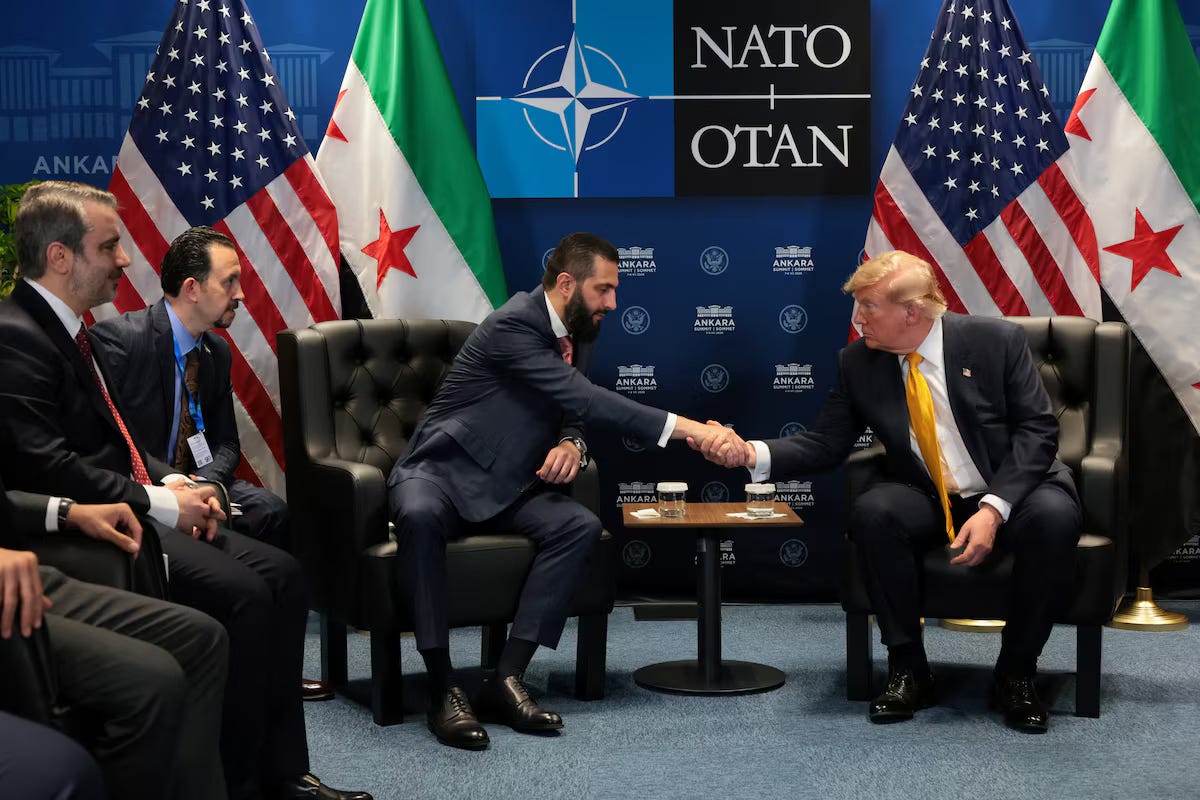
In 2025, the Oval Office played host to a scene that would have been unimaginable just years prior: Donald Trump seated alongside Ahmed al-Sharaa. The image was a profound geopolitical shock. Here was the new leader of Syria—a man whose formative years were spent deep within the very Islamist insurgent networks that Washington spent billions trying to destroy—smiling in the ultimate sanctuary of American sovereignty. It was a stark, almost dizzying reminder of how quickly the theater of realpolitik can turn yesterday’s archenemies into today’s partners.
Few political rehabilitations have unfolded this quickly. Western governments are dismantling years of sanctions, Gulf monarchies are racing to invest, and Washington is negotiating a new era of security cooperation with Damascus.
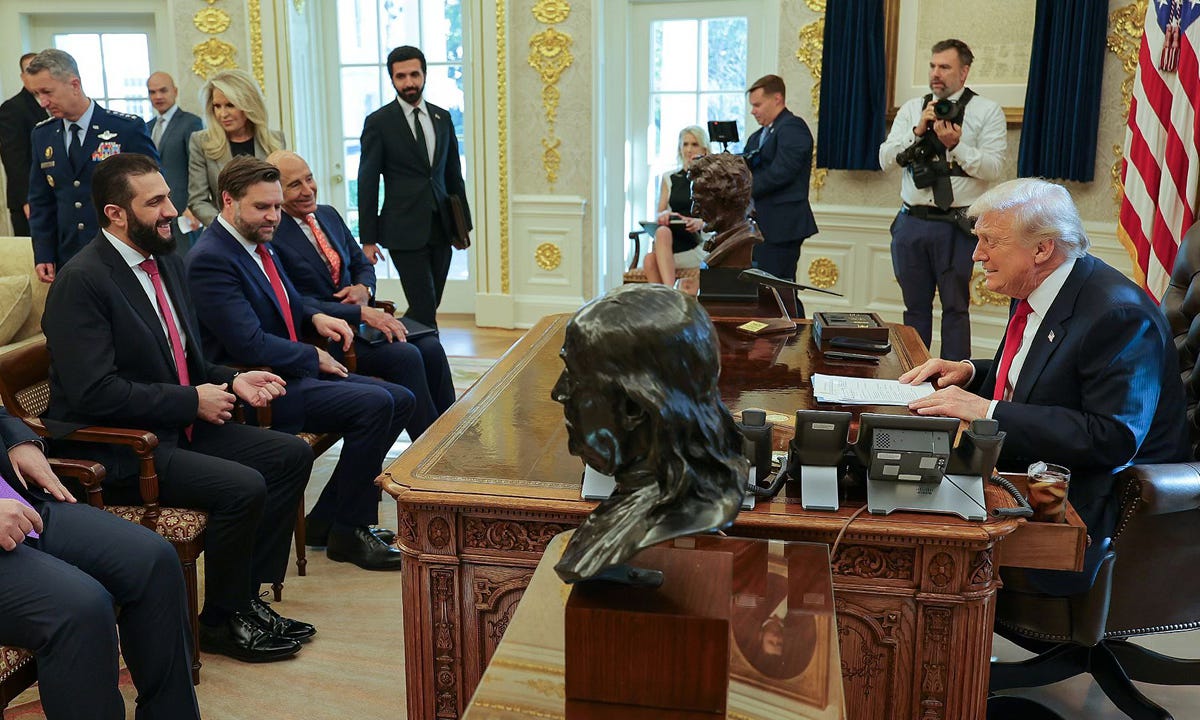
The pace of this strategic shift is even accelerating. The momentum reached a tipping point this week when the two leaders sat down for a high-stakes bilateral meeting on the sidelines of the NATO summit in Ankara. Afterwards, President Trump formally notified Congress of his intention to remove Syria from the U.S. list of State Sponsors of Terrorism, initiating the mandatory 45-day review period.
The decision is more than symbolic: it clears the way for American companies to participate in Syria's reconstruction. As Trump wrote in a letter to Syrian President Ahmed al-Sharaa:
“I promised to remove all barriers stopping you from rebuilding your country, and very soon, you will finally be able to do so. We have U.S. companies ready to invest in Syria and help make your country greater and more prosperous than ever before.”
This dramatic reversal makes far more sense when viewed through a strategic lens. Syria is no longer simply a country emerging from civil war. Its position on the Eastern Mediterranean, combined with its energy infrastructure, has made it a pivotal geopolitical asset. From Washington's perspective, Syria offers an opportunity to reshape the regional balance of power. Seen through that lens, the shift in U.S. policy is far less surprising.
The true blueprint of this grand strategy is hidden within a quiet but aggressive effort by the West and its allies to completely redraw the Middle East's energy architecture. Rather than repeating the overt, Western-fronted reconstruction model that proved politically toxic in Iraq, Washington has engineered a far subtler, proxy-led architecture. An influential bloc of Arab states, led by Riyadh and Abu Dhabi, provides the overt capital and diplomatic framework, while Western companies manage the operation from the background.
The groundwork for this strategic turn was laid when the US and UK moved early to dismantle international sanctions against the former Russian-backed al-Assad regime. This served as a deliberate signal that the West was fully committed to resurrecting Syria’s foundational oil and gas sectors.
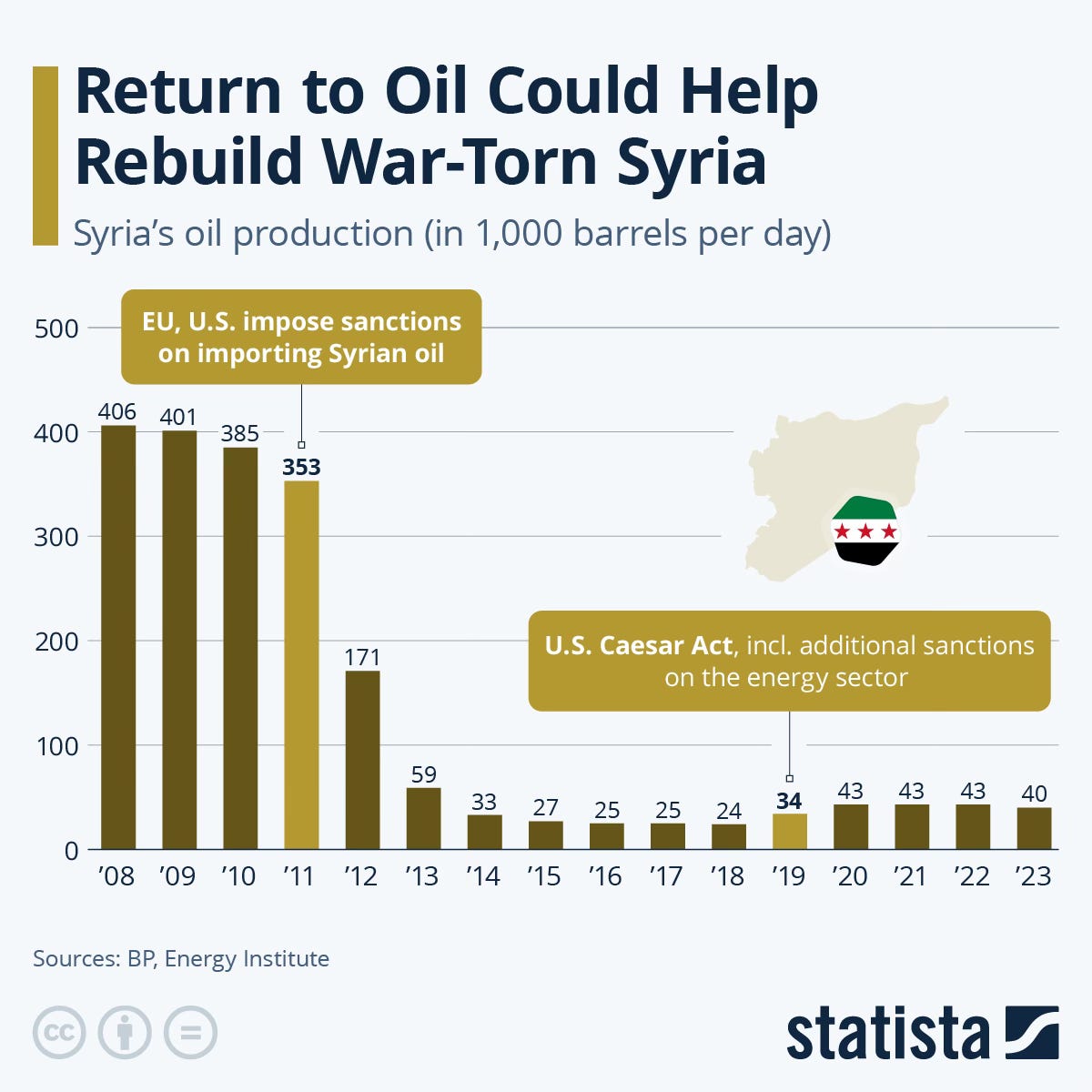
Before the 2011 civil war, Syria was a formidable crude oil powerhouse, pumping up to 600,000 barrels per day (bpd) from proven reserves of 2.5 billion barrels. This output supplied Europe with roughly $3 billion in oil annually, with major refineries in Germany, Italy, and France specifically configured to process Syria’s heavy, sour "Souedie" crude alongside its lighter "Syrian Light" grade via the Mediterranean export terminals of Banias, Tartus, and Latakia.
Even more lucrative than its oil is Syria's gas sector. Prior to the conflict, Syria produced up to 30 million cubic meters of natural gas per day (mcm/d) backed by 8.5 trillion cubic feet of proven reserves. Today, production has cratered to barely 7.6 mcm/d—less than a third of the 18 mcm/d required to keep Syria’s national electricity grid online.
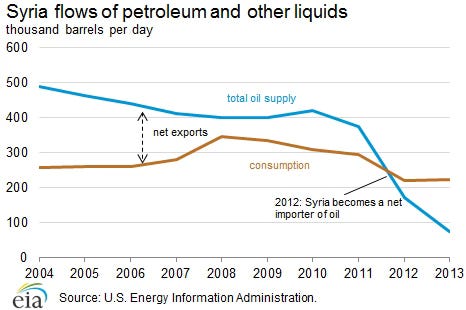
Syria's energy collapse was largely a consequence of war and Western sanctions. Within a year of the U.S. and EU imposing sanctions on Syria's energy sector and banning imports of Syrian oil, the country had gone from a net energy exporter to a net energy importer—despite possessing vast oil and gas reserves.
Ironically, the physical groundwork for Syria's energy resurrection was laid by Russia. Through its years of propping up the previous regime, Moscow deployed US-sanctioned Stroytransgaz to develop the South-Central Gas Area, boosted national gas production by 40%, and signed a massive 2015 Cooperation Plan to restore 40 energy installations—including the Aleppo and Deir Ezzor thermal plants. From a Western perspective, Russia did the heavy lifting; the West is now simply moving in to inherit the infrastructure.
Yet, inheriting this infrastructure is about far more than just turning the lights back on. While securing these energy supplies is vital—especially given the Western embargoes on Russian gas due to the Ukraine war—the immediate access to pipelines and power plants is merely a stepping stone to the much larger geopolitical endgame.
For the past decade, Syria was the absolute linchpin of Russia’s Middle East and North Africa strategy, and a vital hub for China. It gave Moscow a warm-water military presence on the Mediterranean outside NATO’s containment arc, anchoring permanent military reach into the Levant via the Tartus naval facility and Hmeimim airbase. Iran's sphere of influence was equally vast. According to the Jusoor Institute, a Syrian think tank, Iran maintained a staggering 570 military sites across Syria in 2023.
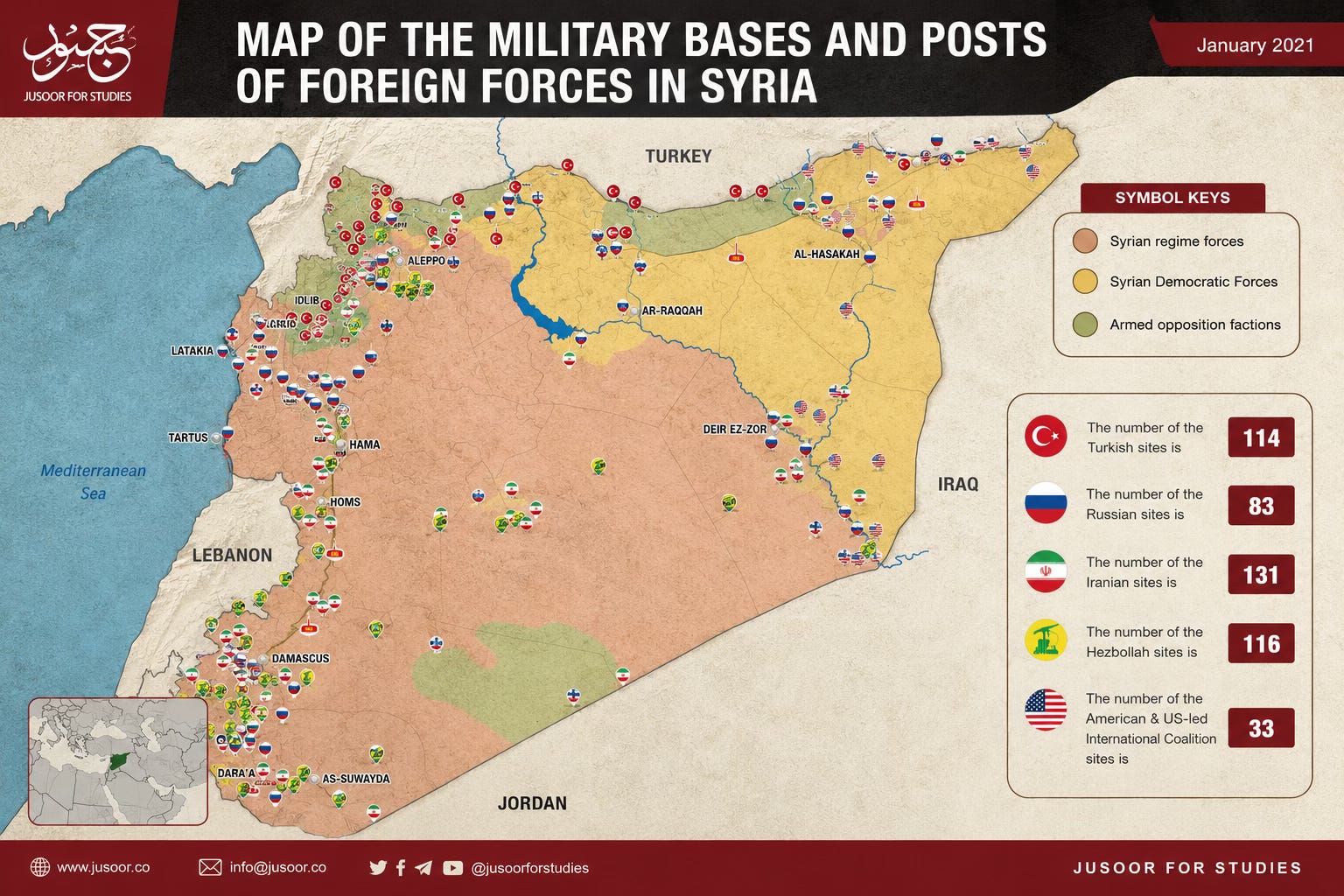
However, as US–Syria relations have strengthened, Russia's military presence in Syria has declined dramatically over the past two years, shrinking from 114 military sites to just two bases today, while Iran has abandoned all its bases.
In fact, Moscow is on the verge of losing its last remaining military foothold. Rather than a secure asset, the future of Russia’s naval base is currently up for re-negotiation, sparking a high-stakes corporate takeover of Syria's strategic coastline.
The economic battle lines have already been drawn at Tartus itself. In a major blow to the Kremlin, Syria’s new government tore up a 49-year contract with Russia's Stroytransgaz, handing an $800 million, 30-year concession to the UAE’s DP World. By replacing a sanctioned Russian giant with a staunchly US-aligned powerhouse, the geopolitical landscape fundamentally altered. Desperate to salvage whatever presence it has left, Russia is now racing to open a commercial logistics hub in one of the base's final berths by mid-July.
The war for Syria is no longer being fought with tanks, but through an intense economic proxy war over ports and logistics hubs.
Syria was also the final, critical destination for Iran’s projected "Land Bridge" from Tehran to the Mediterranean coastline, which was designed to funnel heavy weaponry to Israel's borders. Furthermore, China had embedded this route into its own grand strategy via the $17 billion Iraq-China Strategic Development Road, intending to link Basra to southern Turkey and plug directly into China's Belt and Road Initiative.
The expanded presence of the West and its allies effectively smashes this Sino-Russian-Iranian axis. By locking down Syria’s strategic coastline, the U.S. is shutting Moscow out of the Levant and blocking Iran’s westward corridor.
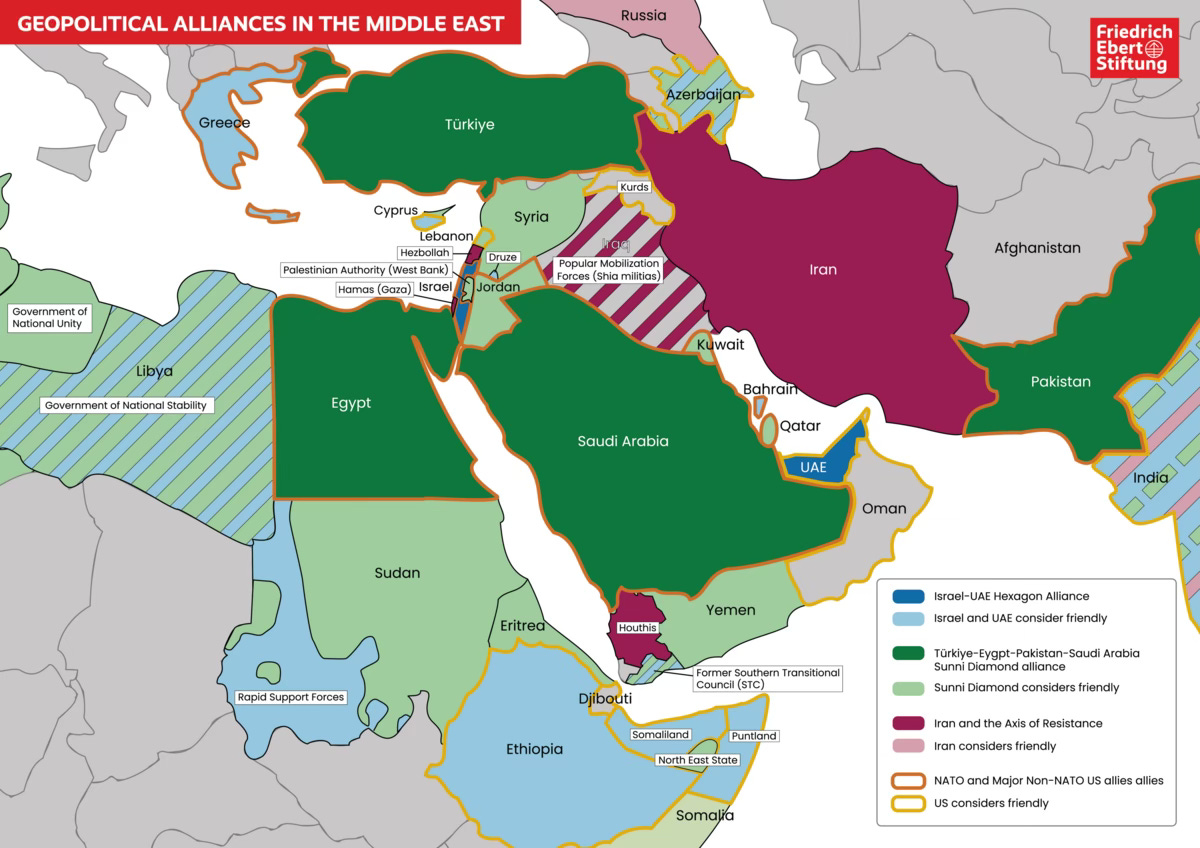
The spearhead of this new Western-Arab alliance became clear with the landmark agreement signed between the Syrian Petroleum Company (SPC), America’s ConocoPhillips, and Britain’s Novaterra ConocoPhillips, focusing on developing new gas fields and maximizing existing output. This Western corporate push is backed by massive Gulf capital and expertise.
The UAE’s Dana Gas—fresh off major gas projects in Egypt and the Khor Mor expansion in Iraqi Kurdistan—has signed a preliminary deal to redevelop Syria’s natural gas fields. Simultaneously, Saudi Arabia’s Ministry of Energy is deploying four of its heavyweight enterprises to provide comprehensive field development and technical support. These initiatives mesh seamlessly with a broader Western consortium that plans on executing a “master plan” to rebuild Syria’s oil, gas, and power sectors, starting west of the Euphrates before moving east.
Ultimately, the ConocoPhillips-Novaterra-SPC deal and the surrounding surge of Gulf-backed energy projects represent far more than a routine energy industrial reboot.
They amount to a deliberate takeover of Syria’s strategic orientation. By anchoring Western corporations at the absolute core of Syria’s post-war reconstruction, Washington secures an unbreakable lever over the political and economic architecture of the Levant.
By pulling Damascus into a regional framework anchored by U.S.-aligned Arab powerhouses, the West is reviving the Arab-Israeli normalisation framework that defined Donald Trump’s first term—effectively locking Russia and China out, and permanently rewriting the strategic map of the Middle East.
What looked like an impossible political rehabilitation was, in reality, the closing sequence of a cold, calculated chess game. Damascus didn’t just buy its way back into international respectability; it traded its geography for survival. As Western rigs move onto Syrian fields and allied flags line the Mediterranean coast, the message is unmistakable.
The decades-long war for Syria didn't end with a traditional peace treaty—it ended with a corporate acquisition, forever altering the balance of power in the Middle East.
Thank you for reading!
If you enjoyed this piece, consider subscribing for free to receive my posts directly in your inbox and support my work!
📨 If you think someone would enjoy this, send it their way!
Keep an eye out for some pipelines from Saudi Arabia and UAE out to the Mediterranean through Syria. By ship or by pipe, the spice will flow.
Very good and under-reported stuff in this piece. I would love a point out to a more in-depth piece that explains the Syrian leader’s change of heart.